
Living Museum of Learning
Theater Opens Before the Curtain Rises
Situation
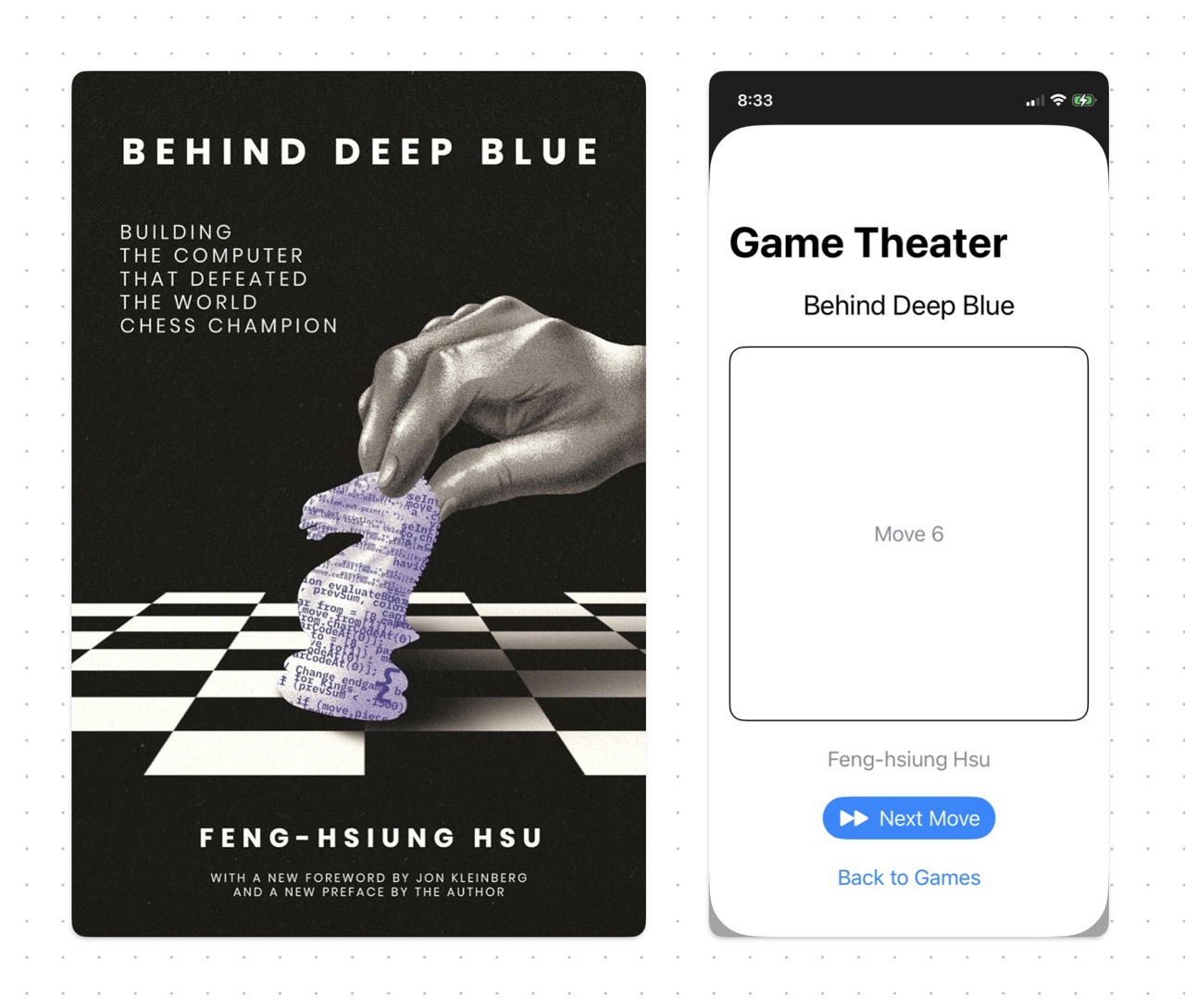
On October 6, 2026, Donald was reading 許峰雄 (Feng-hsiung Hsu)'s 300+ page book, Behind Deep Blue, while working on Golden Chess.
He had three choices for the next development step:
Add Game Theater to Golden Chess
Add Game Theater to Golden Xiangqi
Start the eighth app, Golden Go, from scratch
The book made the choice easy.
The first game Donald wants to put into the new Theater is a famous game from Hsu's own book.
Turning Point
Instead of starting with saved-game storage, replay engines, or complicated architecture, Donald started with something much smaller:
Make the Theater exist.
A menu item called "Game Theater" became a real screen.
Then came fake games.
Then a selected game.
Then an empty stage.
Then a Play button.
Then a move counter.
Each step was tiny enough to run immediately and feel.
Emergence
By the end of the first development session, Game Theater could already do something real:
Games → select a game → enter the stage → advance through moves → return to the games.
There were no saved games yet.
No real chess moves yet.
No replay engine yet.
But the Theater had opened.
And that was enough.
Learning
A large feature does not have to begin with a large implementation.
Sometimes the best way to build something is to create one tiny piece, run it, feel it, and then ask what the next tiny piece should be.
Theater did not begin with a database.
It began with a door.
Theme
Building the stage before deciding what performance belongs on it.
What Is Possible — A game can become something to watch, not just something to play.
How Does It Happen — Build one tiny step, run it, feel it, then take the next step.
Why Does It Matter — The joy of making something can be part of the thing being made.