
Living Museum of Learning
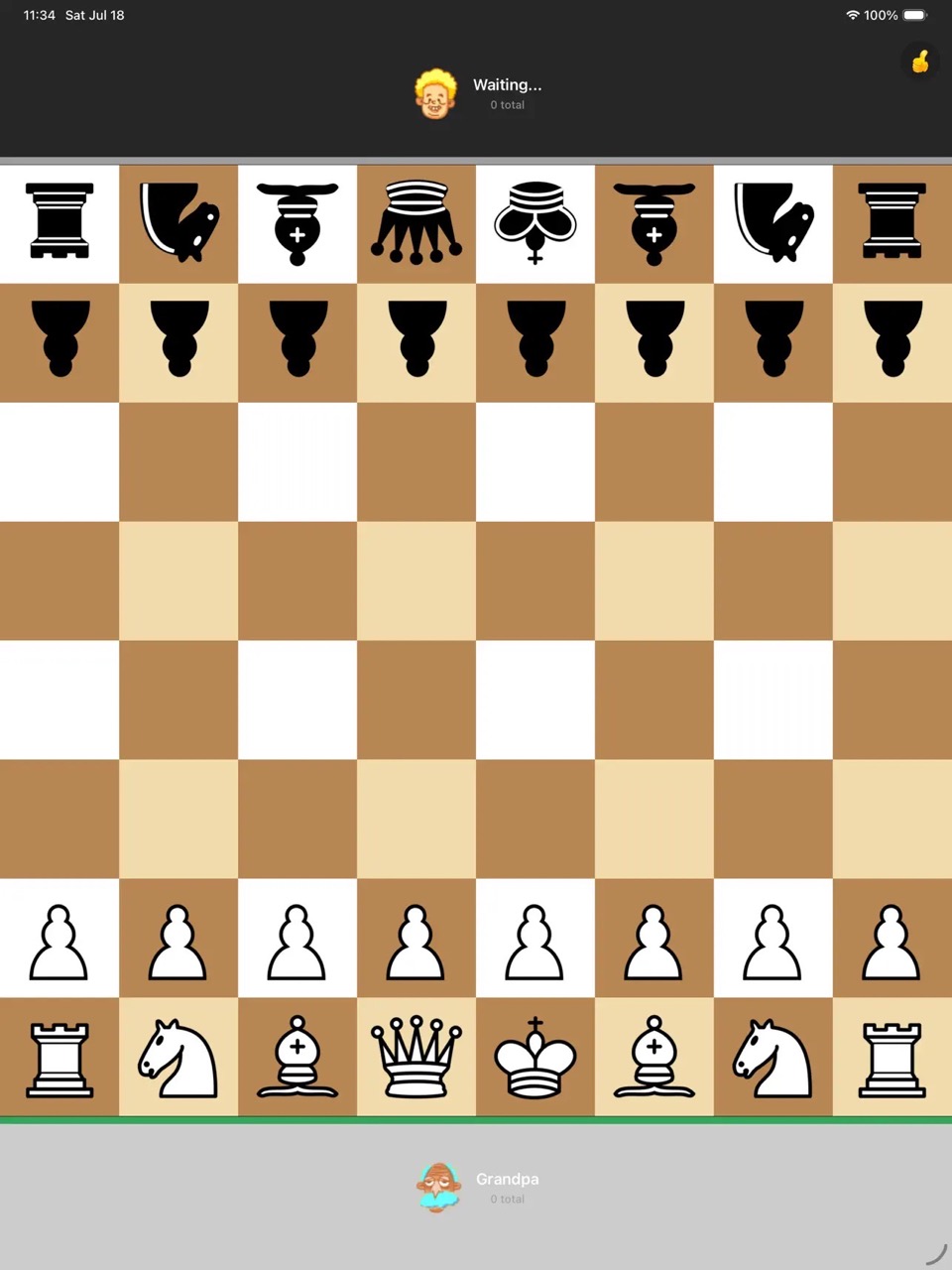
The Weirdest Chessboard in the World
Situation
Golden Chess had been evolving for more than six months.
It started simply, with no network at all. Then came nearby multiplayer through Multipeer Connectivity. Later, we built the Internet Game Bridge so players could play across the internet.
Along the way, we debugged game states, rooms, hosts, guests, moves, connections, and countless other details.
Golden Chess was published again and again. Fourteen builds made it into the App Store.
And through all of this, Donald happily looked at the same chessboard.
It had 64 squares.
It looked like a chessboard.
It worked like a chessboard.
There was just one small detail:
The squares came in three colors: brown, light brown, and white.
Donald didn't notice.
And no, Donald isn't color blind. 😂
Turning Point
One evening, Donald was reading a chess book.
He had Golden Chess open beside him and thought:
Why can't I enter the game move by move while enjoying the book?
That simple idea led to something unexpected.
To enter a chess game from a book, Donald suddenly needed to think about the official chessboard:
Files.
Ranks.
a1.
h1.
White's pieces at the bottom.
The files going from left to right.
The ranks going from bottom to top.
And then he looked at his own board.
Wait.
Why does this chessboard have three colors?
Emergence
The strangest part was not that the board had three colors.
The strangest part was that Donald had been looking at it for more than six months.
Some old App Store screenshots showed a gray-and-white board.
Other screenshots showed the three-color version.
Fourteen published builds had passed through development and App Review.
The board had been sitting there in plain sight the entire time.
But Donald had been looking at it as a programmer:
Does the game work?
Can two players connect?
Does the host receive the move?
Does the guest update?
Does the game state stay synchronized?
The chess book made him look at it differently:
Is this what a chessboard is supposed to look like?
Nothing crashed.
Nothing failed.
Nothing reported an error.
A book simply changed the question.
Learning
Debugging trains us to look for things that are broken.
But sometimes the more interesting discoveries come from noticing something that has been working perfectly well — just not quite as expected.
We can become so familiar with our own creation that we stop really seeing it.
A chess book didn't teach Donald how to program Golden Chess.
It made him look at Golden Chess with fresh eyes.
And that was enough to discover a chessboard he had somehow never actually seen.
Theme
Seeing the familiar again.
What Is Possible
A small question from an ordinary activity — reading a chess book — can uncover an unexpected problem, idea, or possibility in something you've been building for months.
How Does It Happen
Change the question. Change the context. Look at your own creation as if you were seeing it for the first time.
Why Does It Matter
Because experience can make us blind to the familiar. Sometimes the next discovery isn't somewhere new. It's right in front of us.