
Living Museum of Learning
The Gmail Archaeologist
A new learner, Hongyuan, was about to join our Living Museum learning community.
His father had already created a three-person WeChat group for Hongyuan, Donald, and himself. Hongyuan's first contribution was a simple:
“Hi”
Within minutes, Donald had discovered that mathematics could be their common language.
But the next step was more ambitious.
Hongyuan needed to join our Slack workspace, where he could share his screen with Donald and meet the other learners and their projects.
Slack isn't just a messaging tool in our classes. Donald needs to see the learner's screen, interact with what they are creating, and give the learner access to the same growing community of young creators.
So we needed a Slack account that Hongyuan could actually use from Asia.
Donald had helped around ten children set up Slack before, without a single failure.
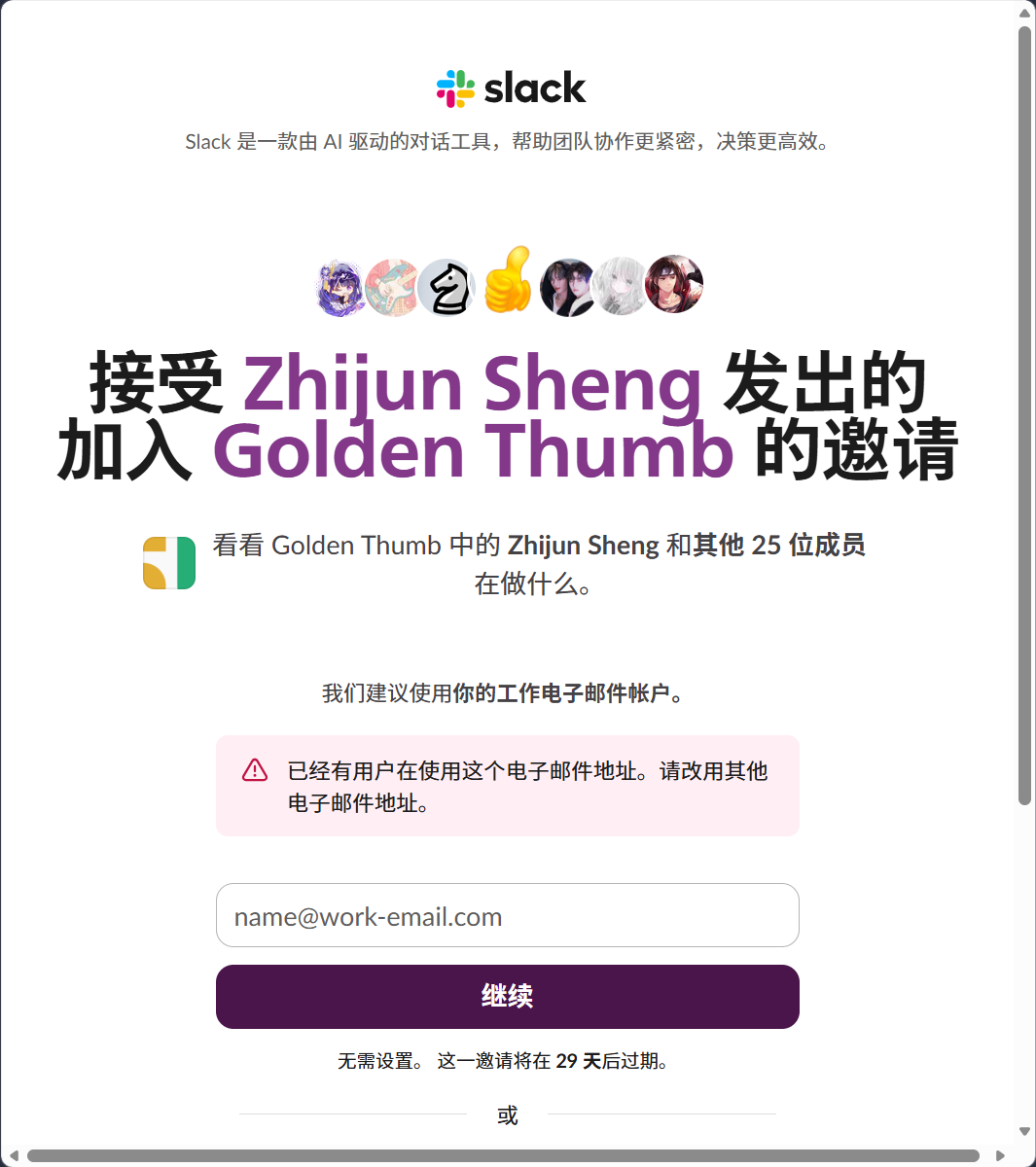
This time, however, Slack kept complaining:
“This email is already being used.”
The strange part was that Donald could use the new Gmail account to enter Slack himself. Hongyuan could not.
VPN had already been tried. YouTube worked through it.
Google had also become suspicious of Donald's Gmail activities.
When Donald tried to create yet another new Gmail using his own phone number and Cindy's phone number, Google finally said:
“This phone number has been used too many times.”
😂
Apparently, after creating Gmail accounts for enough Asian children, Donald had crossed some invisible Google boundary.
So Donald started digging through his own digital archaeology.
Eventually:
“我好不容易找到一个几年前注册的 gmail”
“I finally managed to find a Gmail account I registered several years ago.”
The address was:
hal...@gmail.com
And, most importantly:
“与 Slack 完全绝缘。”
“Completely isolated from Slack.”
This was the experiment we had not tried.
Not:
Create a new Gmail → Donald accepts the Slack invitation → Hongyuan tries to use it.
We had already done that.
Instead:
Find an old Gmail that has never touched Slack → invite it → do not let Donald touch Slack → let Hongyuan be the first person to use it.
A completely new path.
Donald immediately told Qing:
“这是一条没走过的尝试路径,周五备用。”
“This is an attempt along a path we haven't tried before. Backup for Friday.”
Sometimes building a learning environment is itself a learning adventure.
A learner needs a computer.
The computer needs the right software.
The software needs an account.
The account needs verification.
The verification needs a phone number.
The phone number eventually tells the teacher:
Enough, Donald. 😂
And yet the goal remains remarkably simple:
Let a young person enter a space where he can create, think, share his screen, meet other learners, and explore ideas with a teacher.
Hongyuan doesn't need to understand all the infrastructure behind that door.
But Donald does.
Because teaching freedom requires building the environment that makes that freedom possible.
And there is another lesson here.
When the obvious path fails, don't simply repeat it.
Change one variable.
Observe what happened.
Try a path that has never been tested.
In other words:
debug the environment just as we debug the program.