
Living Museum of Learning
From 92% to 88%: The Day the Museum Checked Its Own Foundation
The Living Museum had grown quietly.
New exhibits appeared:
mathematicians entered the gallery,
books found their shelves,
student journeys became learning artifacts,
programming experiments became interactive memories.
One day, the curator noticed:
/dev/sda1 9.7G 8.4G 801M 92% /
The museum was still running smoothly. Visitors were entering. The server was calm.
But the building's storage room was getting crowded.
The curator asked:
"Is the museum becoming too large, or is the building carrying unnecessary weight?"
Instead of immediately buying a bigger building, the curator investigated.
He looked at every room:
The museum archive
/srv/museum
contained the actual exhibits.
Surprisingly:
exhibits: only MBs
mathematicians: only MBs
books: only MBs
learning records: only KBs
The museum itself was lightweight.
The memory vault
The curator discovered:
.git
was almost 400MB.
At first it looked suspicious.
But then he realized:
This was not garbage.
It was history.
Every revision, every improvement, every transformation of the museum was preserved.
The curator did not throw away the past.
He simply organized it.
With:
git gc
the archive became cleaner.
The invisible machinery
The curator checked the building systems:
system journals
package caches
traffic logs
Some space was recovered.
The museum breathed a little easier.
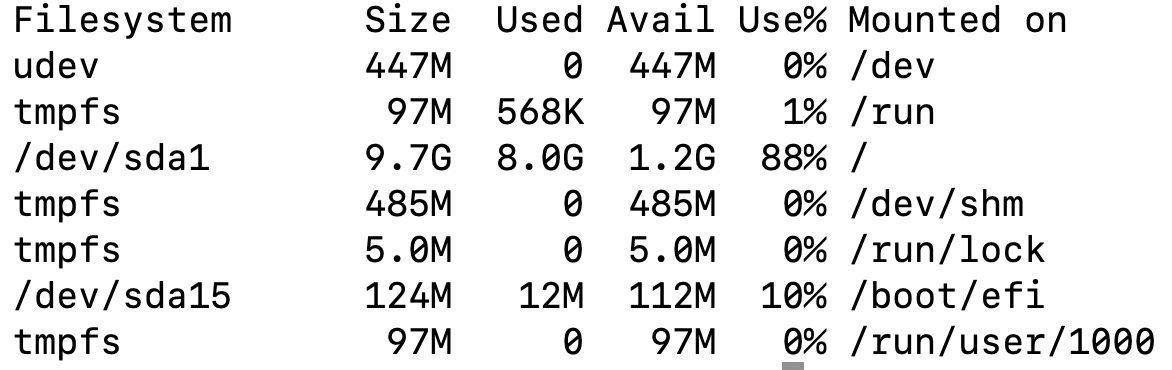
The final measurement:
Before:
92% used
801MB available
After maintenance:
88% used
1.2GB available
The number changed only by 4%.
But the discovery was much bigger:
The museum was not collapsing.
It was healthy.
The curator learned:
"A full room does not always mean too many treasures. Sometimes it means the shelves need organizing."
This maintenance journey revealed several principles:
1. Measure before upgrading
A good engineer does not guess.
The curator asked:
What consumes space?
What is essential?
What can be cleaned?
What should be preserved?
2. History has value
The Git archive looked large because it contained the museum's memory.
A normal website might delete history.
A living museum preserves it.
3. Infrastructure is part of the story
Visitors see:
exhibits
images
animations
They do not see:
disks
logs
repositories
deployment pipelines
But without those invisible systems, the museum cannot stay alive.
A small cloud server can host a growing digital museum.
Through curiosity, measurement, and careful engineering.
Because preserving the journey is part of preserving the creation.
Curator's Note
The curator did not upgrade the building that day.
He first walked through every room.
He discovered:
The museum was not too big.
The museum was simply alive.