
Living Museum of Learning
One Line Away
After our twelfth class, Cloud received a simple homework:
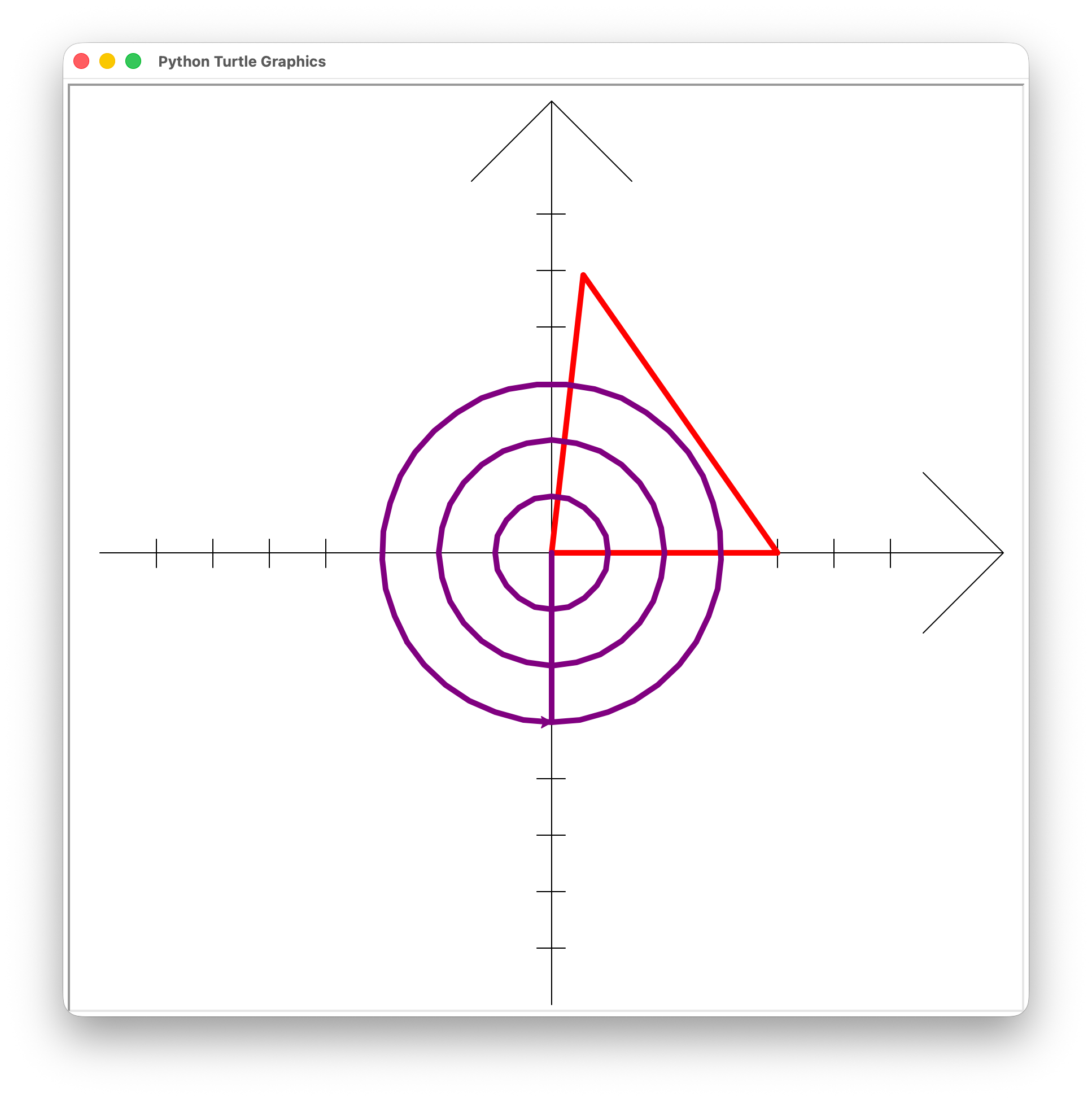
Draw three concentric circles centered at the origin.
During the lesson we had built a coordinate system together, introduced constants to eliminate "magic numbers," separated the program into drawX() and drawY(), and even laughed together while debugging colors.
The homework was intentionally small.
The goal was not circles.
The goal was independent thinking.
His mother reminded him to finish his homework before the evening.
Without anyone planning it, the family had quietly become part of the learning process.
Only a short time later, Cloud submitted his homework.
Three concentric circles appeared exactly where they should.
There was only one small imperfection.
The turtle had walked from the origin to the circles without lifting its pen, leaving a single straight line through the drawing.
I replied with only one sentence:
离完美只有一线之遥。 😛
("One line away from perfection.")
I didn't tell him what to change.
A few seconds later, Cloud replied:
需要改哪里?
Not:
"What's the answer?"
Not:
"I don't know."
Not:
"Can you tell me?"
Instead:
"What needs to be improved?"
That question revealed something much more important than the circles.
The student had started looking for refinement instead of completion.
Programming is not about producing perfect output on the first attempt.
It is about making something that works, observing carefully, and improving it step by step.
The missing idea—lifting the pen before moving—could wait until the next lesson.
The curiosity could not.
Sometimes the greatest progress is not eliminating the final bug.
It is changing the question a student asks.
A beginner can build a complete coordinate system and independently create a clean geometric drawing after only twelve lessons.
By designing homework that is achievable, yet leaves exactly one meaningful idea for the next discovery, learning becomes a continuous journey instead of a sequence of corrections.
The most valuable moment was not the drawing.
It was the student's response:
"需要改哪里?"
That question marks the beginning of craftsmanship.