
Living Museum of Learning
"Oh, yessssss."
Cloud had already completed eleven classes with us.
When we first met, every lesson required enormous effort. Instructions had to be repeated. Simple ideas could become frustrating obstacles. Sometimes I had to raise my voice just to keep him focused.
Today's class felt completely different.
We were no longer fighting the computer.
We were building something together.
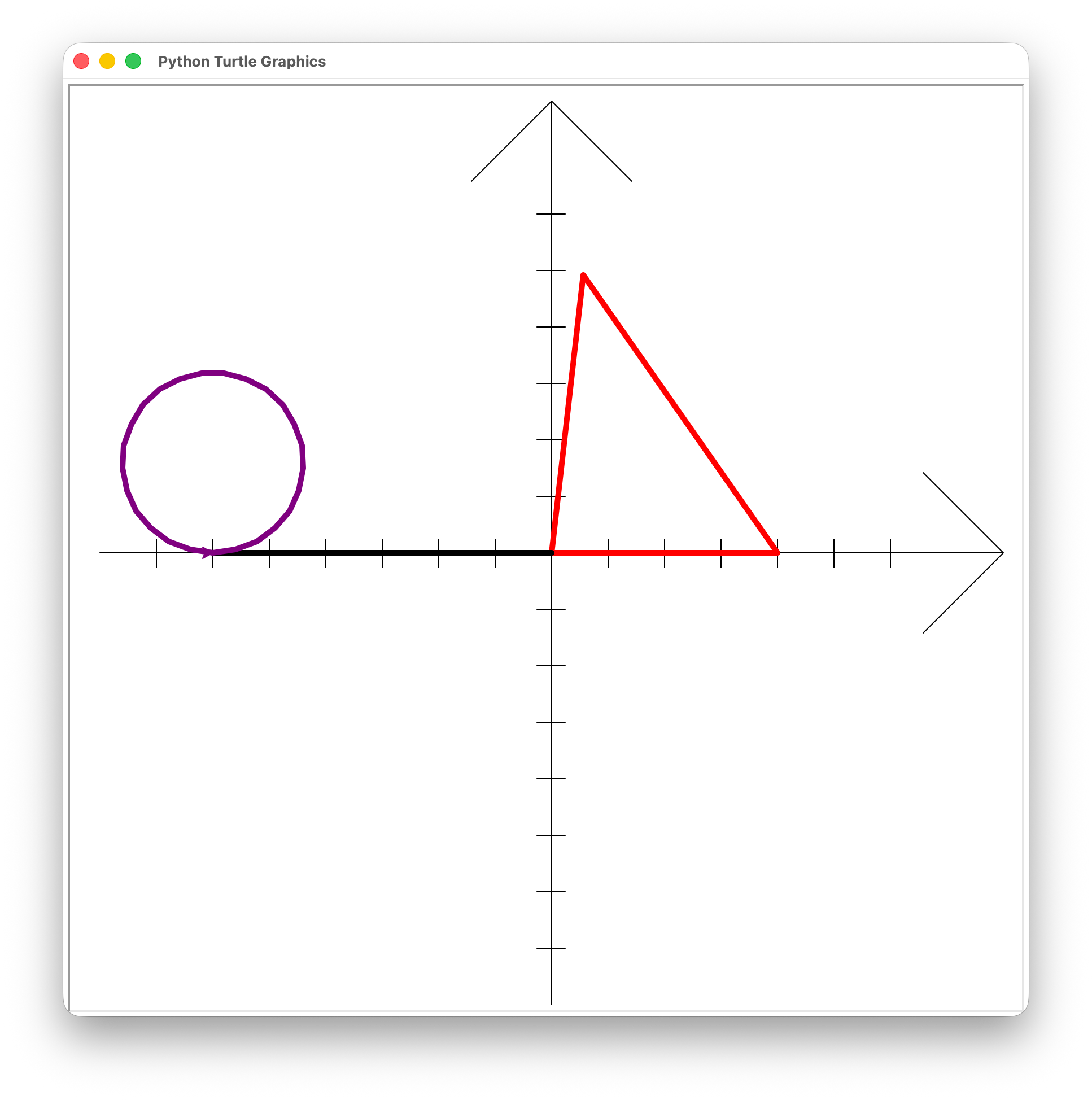
Our goal was simple: create a reusable Cartesian coordinate system using Python Turtle.
But hidden inside that project were some of the most important ideas in programming.
Instead of drawing everything directly, we began organizing the program.
First, we created reusable functions:
drawX()
drawY()
Then we asked a simple question:
"Do we really have to start drawing ticks from the origin?"
Cloud paused.
Then came the moment I will remember:
"Oh, yessssss."
He immediately saw that starting from the left end made the whole problem cleaner.
It was not just a better drawing strategy.
It was a better way of thinking.
As the lesson continued, something exciting happened.
I introduced one constant to control the tick length.
Cloud stared at the screen.
Then he laughed:
"太牛了!"
One number.
Every tick on both axes changed automatically.
Soon we added a second constant to control the spacing between ticks.
Before I could suggest the next improvement, Cloud surprised me.
"What about another constant?"
He wanted one more variable to control the number of iterations in both loops.
He had started designing the program himself.
Later we debated whether another color("red") statement was really necessary.
Cloud insisted it was.
A few seconds later he examined the code again.
"Oh... oops..."
We both laughed.
It no longer felt like teacher and student.
It felt like two programmers debugging together.
Today's lesson was never really about Turtle Graphics.
It was about discovering why programmers love abstraction.
Cloud experienced several powerful ideas in a single afternoon:
Copying and adapting working code is often smarter than rewriting everything.
One named constant can replace dozens of repeated numbers.
Different constants should represent different ideas.
Functions make programs easier to understand.
A simpler starting point can simplify an entire algorithm.
Good code grows through discussion, questions, and experimentation.
Perhaps the biggest change was not in the code.
It was in the conversation.
Cloud asked questions that beginners rarely ask:
"What if we use up all 26 letters for constant names?"
That was no longer a question about Python.
It was a question about programming itself.
Reflection
The greatest surprise was not the coordinate axes.
It was Cloud.
A few weeks earlier, he mainly waited for instructions.
Today, he questioned ideas, suggested improvements, defended his own reasoning, admitted mistakes with a smile, and celebrated elegant solutions.
Trust had quietly grown between us.
I no longer needed to push the class forward.
Curiosity did.
That may be the most important milestone of all.
A student can progress from executing code to shaping its design in just a few weeks when curiosity is encouraged.
By solving one authentic problem together, introducing abstraction gradually, and treating questions as discoveries rather than interruptions.
Programming is not about memorizing commands. It is about learning to see patterns, simplify complexity, and create ideas that can be reused far beyond a single program.