
Living Museum of Learning
The Next Door
Situation
In 2026, at 60, Donald was teaching a small group of teenagers intensely—following their questions wherever they led, often investing much more than the ordinary definition of a tutoring hour would suggest.
One evening, a parent nervously called to discuss tuition. The conversation eventually turned to another child, a childhood friend of one of Donald's students, whose family might also benefit from this kind of learning.
The practical question was simple:
What happens when a child needs an opportunity that a family cannot comfortably afford?
Turning Point
The next morning, Donald woke up with an idea.
He remembered something from his own life.
Years earlier, while trying to obtain a U.S. visa, he had received an extraordinary act of personal kindness. An American congressman—someone connected only through several layers of friendship—spent half of one of his two-day visits to Shanghai accompanying Donald to the U.S. Consulate.
The congressman could not make the visa happen.
The consular officer ultimately refused the application, explained the decision, and applied the rules.
The door closed.
But someone had been willing to walk with Donald to that door.
Donald eventually applied twice, was refused twice, and ultimately found another path: Canada.
Emergence
Decades later, Donald suddenly saw a connection.
Perhaps helping a child does not mean guaranteeing the outcome.
Perhaps it means making sure that money is not the only thing deciding whether the child gets to approach the door.
And so, half seriously and half poetically, he called the idea:
The Marshall Plan.
Parents contribute what they reasonably can.
Donald invests the rest.
The child does not owe Donald the money later.
Instead, if that child eventually grows into someone with the ability to help others, the hope is that the investment continues forward.
Not repayment.
Propagation.
Learning
Donald realized that the most important help he had received in life did not necessarily produce the outcome someone intended.
The congressman did not obtain his visa.
The visa officer did not bend the rules.
The door still closed.
But the experience taught Donald something more enduring:
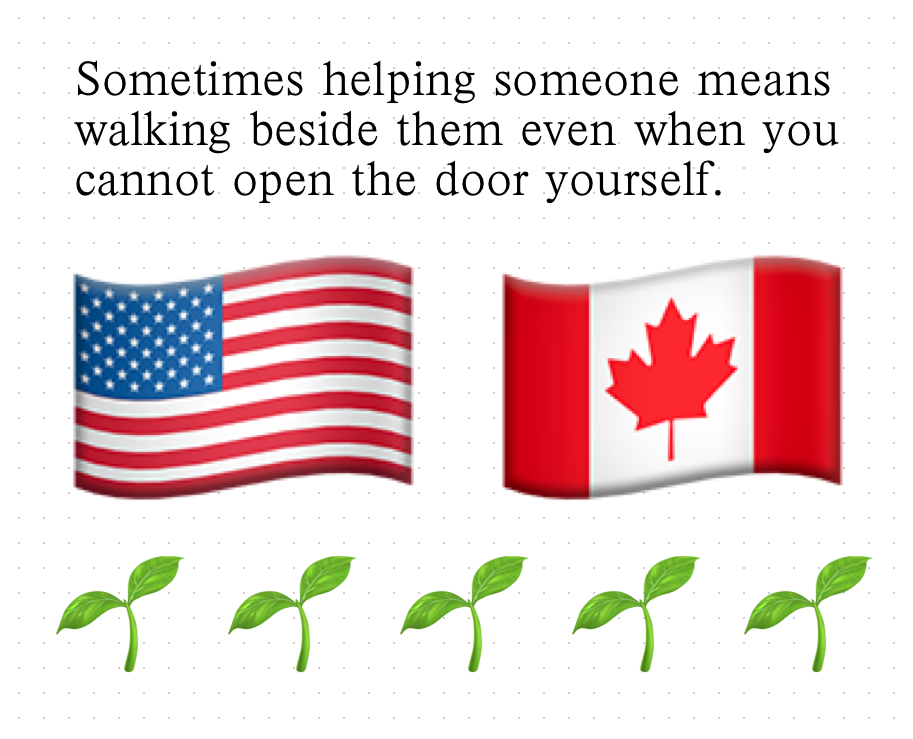
Sometimes helping someone means walking beside them even when you cannot open the door yourself.
And perhaps education works the same way.
A teacher cannot determine where a child will eventually go.
But a teacher can open possibilities, provide companionship, remove unnecessary barriers, and help a child discover the next door.
What Is Possible — A child's path does not have to be determined entirely by the circumstances of one moment.
How Does It Happen — Someone invests time, trust, and opportunity before knowing what the outcome will be.
Why Does It Matter — What we receive from others can continue through us into someone else's life.
有时候门会关上。
但只要有人愿意陪你走到下一扇门,故事就还没有结束。
Sometimes a door closes.
But as long as someone is willing to walk with you to the next door, the story is not over.