
Living Museum of Learning
The Two Girls Are So Happy Now
Whenever Cindy finishes work and doesn't want to cook dinner, she and Donald have a little ritual.
Cindy drives to the building to pick Donald up. They switch drivers, and the two of them go out for dinner.
This time, they ended up at McDonald’s in a food court.
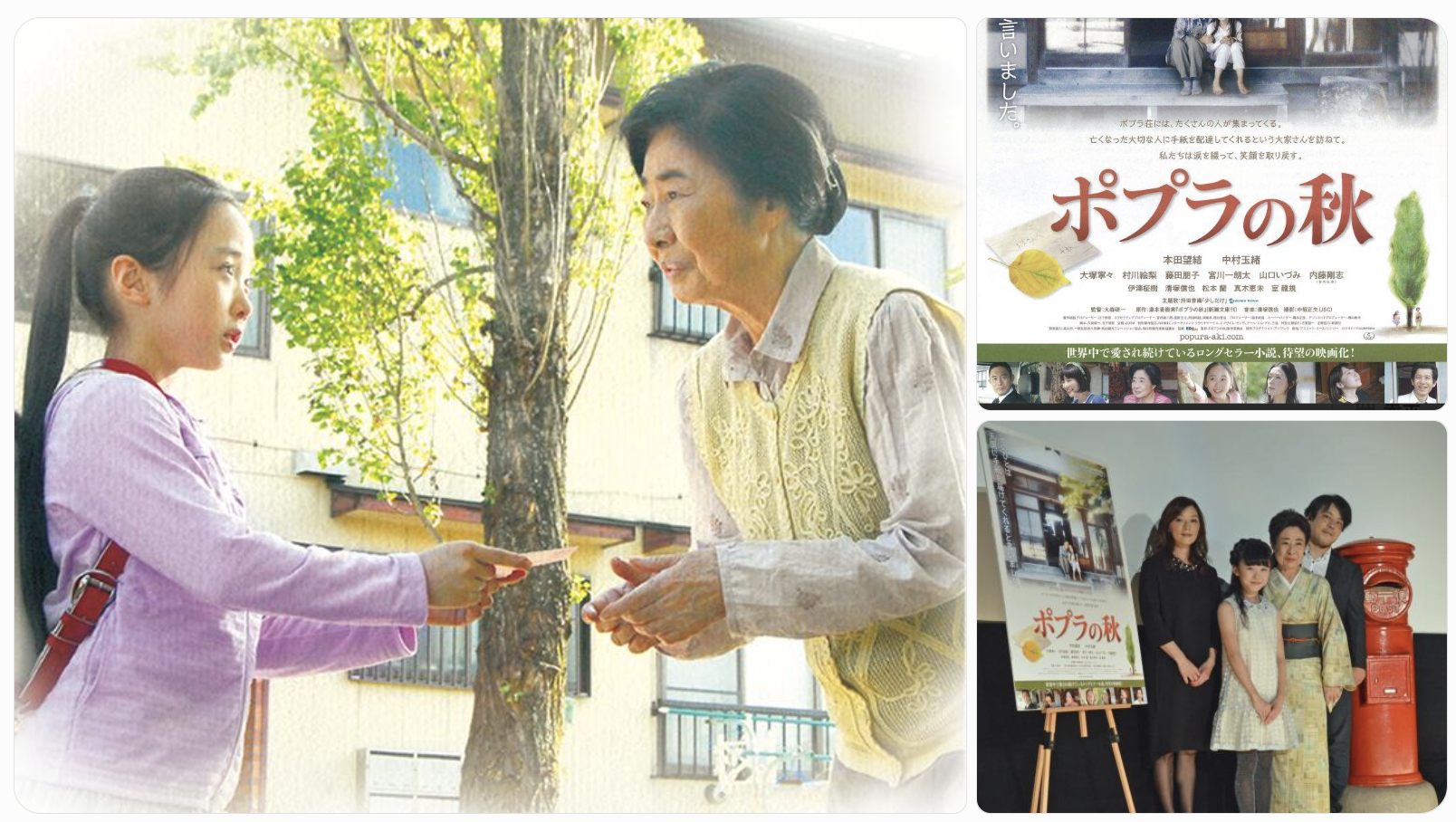
Cindy told Donald about a Japanese movie she had watched on YouTube.
A little girl had lost her father. Her mother told her that Daddy had died in an accident. They moved to a new place, hoping that the big tree there and a new home might help their broken hearts heal.
The owner was an old lady who didn't particularly like children.
But one day, she found the little girl faint and helped her. When she asked why the girl was sad, she told her something extraordinary:
She could deliver letters to people who had died.
The little girl began writing letters to Daddy seriously.
She even worried that the old lady might not live long enough to deliver everything.
There were so many things she still wanted to tell him.
She asked Mommy to write letters too.
And Mommy did.
One letter after another, the letters accumulated in the old lady's room.
Then the old lady died.
Years later, the girl—now a young woman—returned to the old home and received one special letter from her mother.
And then came the truth.
Daddy had not died in an accident.
After losing his job, he had taken his own life.
Donald and Cindy both had red eyes.
Donald said:
“Suicide sounds like he gave up two of them.”
Not only himself.
The two people who remained.
The daughter who kept writing to him.
The mother who kept writing too.
The people who would have to continue living with everything left unsaid.
Then the movie opened another door.
Donald began telling Cindy about Enning.
There was a time when Enning had no school.
Instead of simply accepting that situation, she asked Donald:
“Could you arrange something for me in your convenience?”
Donald was choked up several times trying to finish the sentences.
He told Cindy:
“The two girls are so happy now.”
Cindy might not have had every piece of the story in her mind.
But Donald did.
The Japanese movie was fiction.
Enning was real.
And suddenly the two stories were standing beside each other.
One little girl had needed someone who would listen to her.
Another girl had needed somewhere to go when there was no school for her.
And there was something else Donald remembered.
He had cried before.
When his brother told him that his son couldn't go to university like the other kids, Donald cried.
When Cloud's mother told him that Cloud couldn't understand what his math teacher was talking about, couldn't finish his homework, and had nobody who understood what was happening inside him, Donald cried.
Even though Cloud's father was one of the best developers in China, that did not automatically mean someone could reach the child.
Donald kept encountering children who were not necessarily lacking ability.
Sometimes they were simply not being reached.
And something happened when Donald stayed with them.
Learning became joy.
The kids loved staying with Donald.
As they grew older, their parents sometimes understood less and less of what was happening inside their children.
But Donald was sometimes almost like another kid.
He enjoyed discovering things with them.
A strange mistake could make him laugh.
A surprising idea could keep him thinking all night.
A tiny breakthrough could become an event.
And when class ended, Donald's mind often didn't.
He would spend more time than the class itself ruminating about what had happened.
Then he would write down whatever seemed worth preserving.
An idea.
A mistake.
A breakthrough.
A laugh.
A sentence.
A moment when a child suddenly became more alive.
And eventually, another exhibit would appear.
Donald is not really a saver.
At least, he doesn't think of himself that way.
A saver stands above someone and says:
“I will save you.”
Donald is doing something different.
He stays.
He plays.
He thinks.
He learns with them.
And sometimes, because he enjoyed the moment so much, he refuses to let the moment disappear.
So he records it.
The Living Museum is not primarily a collection of children's accomplishments.
It is a collection of moments when learning became alive.