
Living Museum of Learning
Are You Brave Enough to Post This?
nning is 16.
She is bright, curious, creative—and, sometimes, careless.
That carelessness shows up in many forms: moving too quickly, forgetting what she has just learned, assuming she has tested something when she hasn't, or giving an answer before carefully checking the steps that produced it.
Donald has been trying to help her improve in many directions.
Not by constantly telling her, “Be careful.”
Instead, he keeps putting her in situations where carefulness becomes necessary for thinking.
On the first day of Grade 9 for her younger sister Tianjing, Enning had her own mathematical drama.
Donald asked:
“Do you have math class today?”
“Yes, but we didn't learn anything new.”
So he asked her to show what kind of math she had actually done at school.
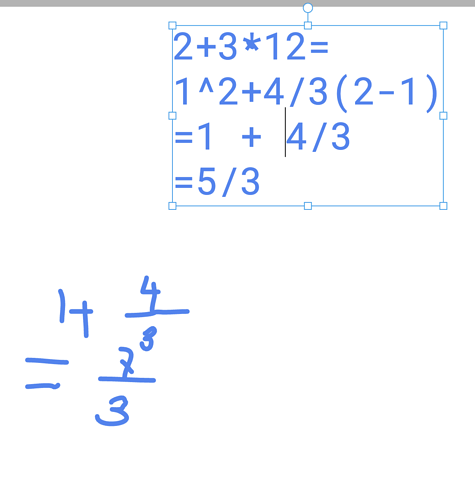
She wrote:
2 + 3 × 12 =
Simple.
Then she wrote:
1² + 4/3(2−1)
Donald asked:
“What's 1 squared?”
With Enning, nothing is assumed.
She answered seriously:
“1.”
Good.
Then she continued:
= 1 + 4/3
So far, still good.
Then came the drama:
= 5/3
The interesting part wasn't that she got the answer wrong.
It was how she got it wrong.
She had effectively treated the expression as though she could add the 1 to the 4 before dealing with the division by 3.
The correct order is:
1 + 4/3
= 1 + 1 1/3
= 7/3
The mistake revealed something much more useful than a wrong answer.
Her mental model was visible.
And that is exactly why Donald doesn't simply tell her whether an answer is right.
He wants to see how she got there.
The Bigger Problem
For Enning, the challenge isn't one fraction.
It is a habit.
A careless student can often produce an answer quickly. The dangerous part is that speed can create the illusion of understanding.
So Donald keeps asking questions that force her to expose the intermediate steps:
What does this mean?
What did you actually calculate?
Show me.
Which piece did you move?
Did you really test that?
What happens if we try the neighboring cell?
Where exactly did the number come from?
The goal isn't to make her afraid of mistakes.
It is to make her interested in finding them herself.
A Small Test of Courage
Later, Donald looked at the calculation and asked her something slightly different:
“Are you brave enough to post this?”
Not the polished answer.
Not a successful project.
Not a beautiful piece of code.
This.
Her own calculation.
Including the mistake.
Enning laughed.
“This? Sure.”
That little “Sure” mattered.
Because learning to think carefully requires another kind of courage:
the courage to let other people see your unfinished thinking.
A mistake hidden away teaches very little.
A mistake examined openly can become an exhibit.
And then, naturally, our drama queen had another act.
After the class, she was reviewing the 3D p5.js material on her own.
She got stuck.
Her message arrived:
“但这个一直没有显示出来没有变化为什么啊🧐”
“But this one still doesn't show up or change. Why?”
Donald suggested:
“Want to go to Slack?”
“wait 😁”
They came back online and looked at the code together.
Among several similar lines that worked, Enning had one crucial difference.
She drew the cylinder first.
Then she tried to rotate and translate it.
In effect:
cylinder(...)
rotateZ(...)
translate(...)
Donald looked at it.
Then gave her the simplest possible diagnosis:
“You rotate too late.”
And she burst out laughing.
Of course.
The cylinder had already been drawn.
The transformation came afterward.
There was nothing left to transform.
That little debugging moment connected several things Enning had been learning.
First: order matters.
In mathematics, the order of operations matters.
In programming, the order of operations matters.
In 3D graphics, the order of transformations matters.
Second: don't trust intention—inspect what actually happened.
Earlier, while testing her chess app, Enning thought she had tried moving the king.
She hadn't.
She had actually picked up the bishop.
“I think I tried that???”
Her memory said one thing.
The experiment said another.
The experiment wins.
Third: a careless mistake can become a thinking lesson.
The fraction mistake wasn't something to be ashamed of.
The late rotation wasn't something to be frustrated about.
Both were opportunities to slow down, inspect the sequence, and discover the hidden rule.
Fourth: confidence and carefulness are not opposites.
Enning can confidently say “1” when asked for 1².
She can confidently write 5/3.
She can confidently say “This? Sure” when asked whether the mistake can be posted.
The goal is not to make that confidence disappear.
The goal is to add something to it:
the habit of checking.
The Drama Queen's Dramatic Ending
The day could have ended with a normal class.
But Enning wouldn't allow that.
First, there was the fraction.
Then the wrong answer.
Then the public admission:
“This? Sure.”
Then the mysterious 3D object that refused to move.
Then Slack.
Then the code inspection.
Then:
“You rotate too late.”
And finally, uncontrollable laughter.
Perhaps that is what progress looks like for a careless learner.
Not suddenly becoming perfectly careful.
But gradually becoming someone who can:
make a mistake → expose it → investigate it → understand it → laugh → try again.
At 16, that is already a meaningful transformation.
And our drama queen?
She is still very much our drama queen.
We're just teaching her to debug herself along the way. 🎭😂
A careless learner can become increasingly precise without losing confidence, curiosity, creativity, or humor.
Make the learner show the thinking, not just the answer; expose mistakes safely; compare intention with actual behavior; and repeatedly turn small errors into discoveries.
The ability to inspect one's own thinking may be more valuable than getting today's answer right. It is the foundation of independent learning, debugging, mathematics, programming, and eventually, self-correction.