
Living Museum of Learning
The Girl Who Said “Not Real” and the Girl Who Filled the Space
On the last day of August, two sisters offered two tiny but revealing moments from their learning.
In Tianjing's Grade 8 Khan Academy class, a statistics problem showed a diagram about internet use across different age groups. The graph suggested a familiar pattern: younger people spend more time online, while older people spend less.
Tianjing looked at it and immediately said:
“Not real.”
Then she explained why.
“My dad is 24 hours online.”
LOL.
She was not refusing to do the problem. She was noticing that a statistical model did not quite match the world she knew. Before accepting the graph as reality, she compared it with her own observations.
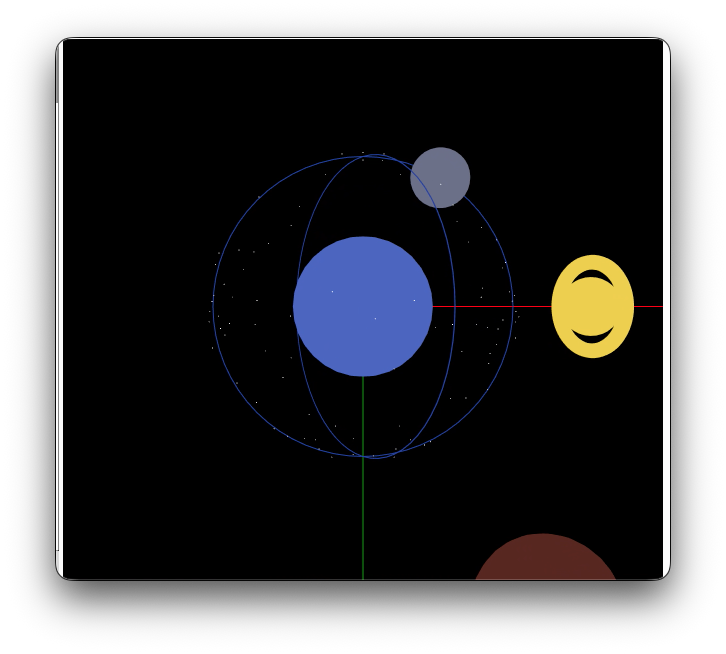
Meanwhile, Enning submitted a P5JS WEBGL homework project that was almost shocking in a completely different way.
The code contained toruses, spheres, rotations, translations, coordinate axes, and a large collection of manually positioned points scattered throughout 3D space. There were repeated structures, experiments with positive and negative coordinates, objects moving around the center, and enough points to make the space feel genuinely inhabited.
The code was not clean yet. Some transformations were redundant. Some structures were repeated. There was plenty to refactor.
But something much more important had happened.
Enning had stopped treating the canvas as an empty place waiting for instructions.
She had started filling it with her own ideas.
The two moments looked unrelated: one was a comment about a statistics graph; the other was a piece of P5JS code.
But together they revealed the same turning point.
The sisters were no longer simply receiving a lesson and producing an answer.
Tianjing questioned the representation.
Enning expanded the environment.
One asked, “Does this really describe the world?”
The other seemed to ask, “What can I put into this world?”
Learning becomes powerful when the student's own mind begins to appear inside the work.
Tianjing's “Not real” was a tiny act of skepticism. She was beginning to distinguish between a model and reality. A graph can summarize data, but it is not reality itself. And when her personal experience contradicted the apparent story, she noticed.
Her father's legendary 24-hour internet presence may not qualify as a statistically representative sample. LOL. But the intellectual move was real: she checked the claim instead of passively accepting it.
Enning's project showed a different kind of emergence.
Her code was not merely an implementation of a prescribed object. The enormous threeLines() function revealed an urge to explore space. Point after point appeared at different coordinates and depths. Objects rotated. Spheres and toruses interacted. The canvas became a place for experimentation.
A few days earlier, the challenge had been getting her to create something as simple as a line in a new project.
Now she had made the space rich.
The code still needs engineering.
But the imagination has already arrived.
These sisters are developing different but complementary intellectual muscles.
Tianjing is learning that information deserves examination. A diagram is not automatically true simply because it appears in a math problem. A model is something we can question, compare with evidence, and understand.
Enning is learning that code is not merely a sequence of instructions to imitate. Code can become a language for constructing something that did not exist before.
One is becoming more willing to challenge what she sees.
The other is becoming more willing to create what she cannot yet see.
Both are moving from compliance toward agency.
And perhaps this is why the morning quote sent to their families feels so appropriate:
“Weakness of attitude becomes weakness of character.”
— Albert Einstein
The opposite is also worth watching.
A strong learning attitude gradually becomes intellectual character.
Not “I must get the right answer.”
But:
“I should check whether this makes sense.”
And:
“I wonder what I can make.”