
Living Museum of Learning
Maybe I Will Be
Cloud openly told his mother and Donald that he is not a mathematics enthusiast. He likes playing games, dislikes doing homework, and would prefer to improve quickly without putting in too much effort. Yet when asked why he wants to learn mathematics, he gave a surprisingly clear answer:
“数学很重要,数学学不好物理化学都学不好。”
“Math is important. If you can't do math well, you can't do physics and chemistry well.”
He knows where he wants to go, even if he doesn't yet love the road.
Cloud said:
“我目前只是想要把数学学好,所以才不是数学爱好者,将来也许会是。”
“Right now I just want to get good at math, so I'm not a math enthusiast. Maybe I will be one someday.”
Donald did not try to convince him that he should love mathematics.
He simply replied:
“不要轻易下结论哦。”
“Don't draw that conclusion too quickly.”
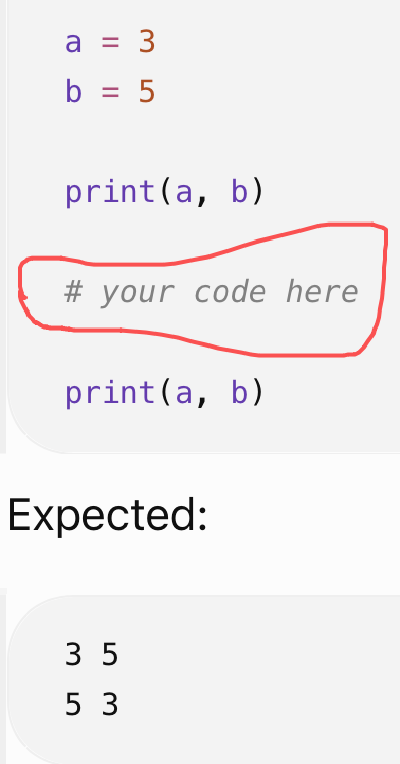
Then came the real work: Cloud struggled with a simple variable-swapping assignment, tried several incorrect approaches, asked questions, misunderstood the task, tried again, and eventually discovered the temporary-variable method himself.
Cloud finally produced working code:
w = 3
m = 5
print(m, w)
g = m
m = w
w = g
print(m, w)
Donald replied:
“圆满!👍 睡个好觉。”
“Perfect! 👍 Get some good sleep.”
The code itself was elementary.
The learning process was not.
Cloud experienced something much more important: being wrong did not stop him from eventually being right.
Meanwhile, he was surrounded by evidence of what sustained effort could produce. Ethan was constructing a 3D icosahedron from golden-ratio geometry. Enning was building her first iOS app. Cloud could see the “jump” he wanted to make—but he was also beginning to understand that the jump required daily work.
A student does not have to love a subject before learning it seriously.
Motivation can begin with something much simpler:
“I want to get good at this.”
From there, the teacher's job is not to force passion, but to keep the door open, make the next step achievable, and let the student experience the consequences of his own choices.
Cloud wants to progress quickly without working hard.
That's okay.
He can choose that path—and discover that it simply leads to slower progress.
Or he can choose to work.
The choice belongs to him.
And perhaps, somewhere along that road, “I want to get good at math” may quietly become “I like math.”
A student who doesn't consider himself a math lover can still develop a strong desire to become good at mathematics.
Respect the student's honesty, keep expectations clear, let mistakes happen, and turn each successful struggle into evidence of capability.
Passion doesn't always come first. Sometimes competence comes first—and passion follows later.