Living Museum of Learning
Beyond the Lesson
Just two weeks earlier, Cloud had no programming experience at all.
He also had very little confidence in himself.
Every new concept looked intimidating.
Every mistake felt significant.
Lesson by lesson, however, something began to change.
Instead of protecting his confidence by avoiding mistakes, he started building confidence by fixing them.
Lesson 13 introduced four new ideas:
input()
if
else
% (the remainder operator)
Cloud spent several minutes understanding what a remainder actually is.
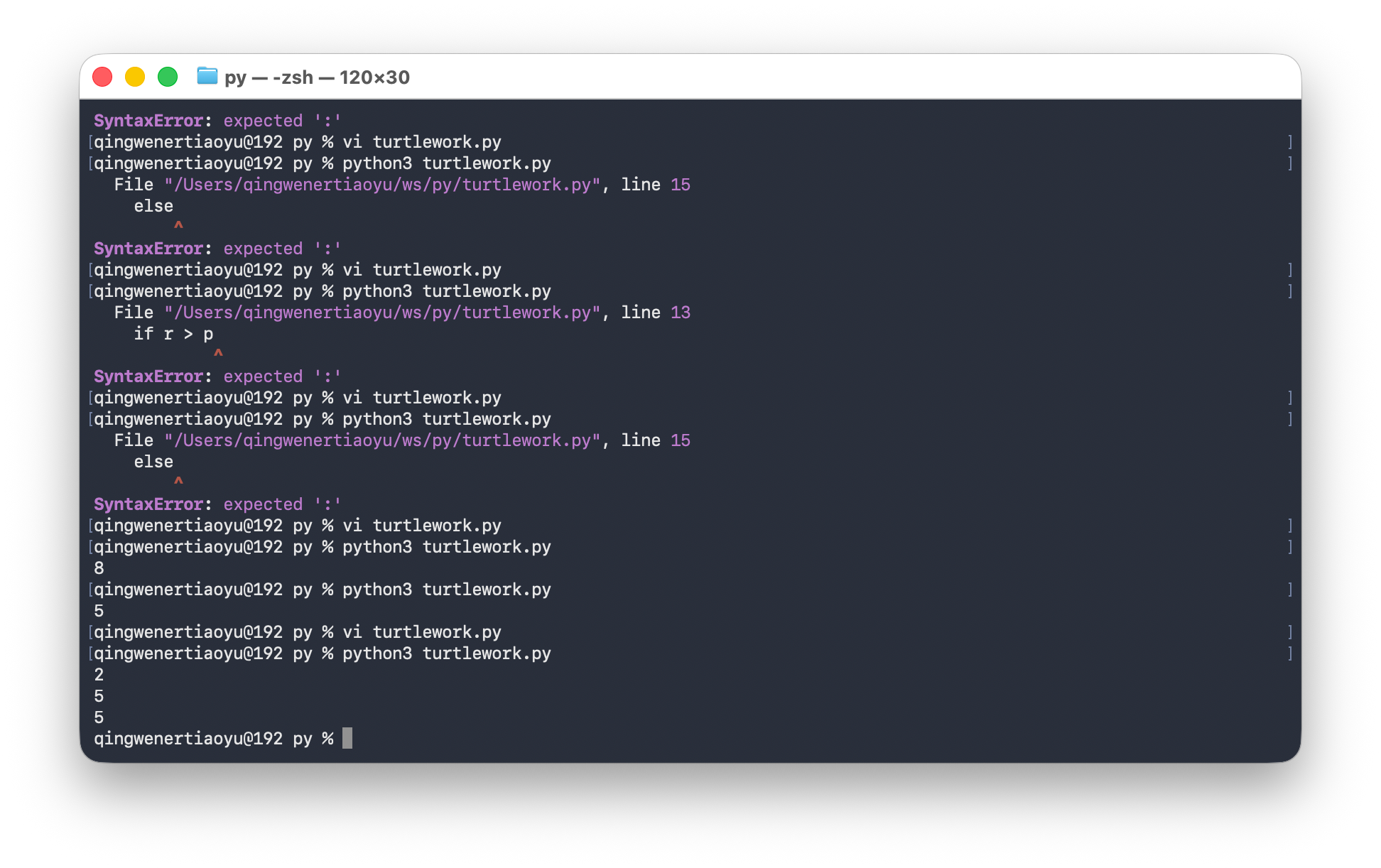
Then he fixed more than ten different bugs before his parity checker finally worked.
When it did, he smiled and said:
"Cool!"
Homework followed immediately:
Generate three random integers.
Print the greatest one.
There was one surprise.
Cloud had never learned nested if statements or elif in class.
Yet he submitted a working solution.
His teacher's first reaction was not to correct the code.
It was genuine curiosity:
"How did he figure this out?"
For the first time, Cloud had crossed the boundary between following a lesson and exploring beyond it.
Evidence
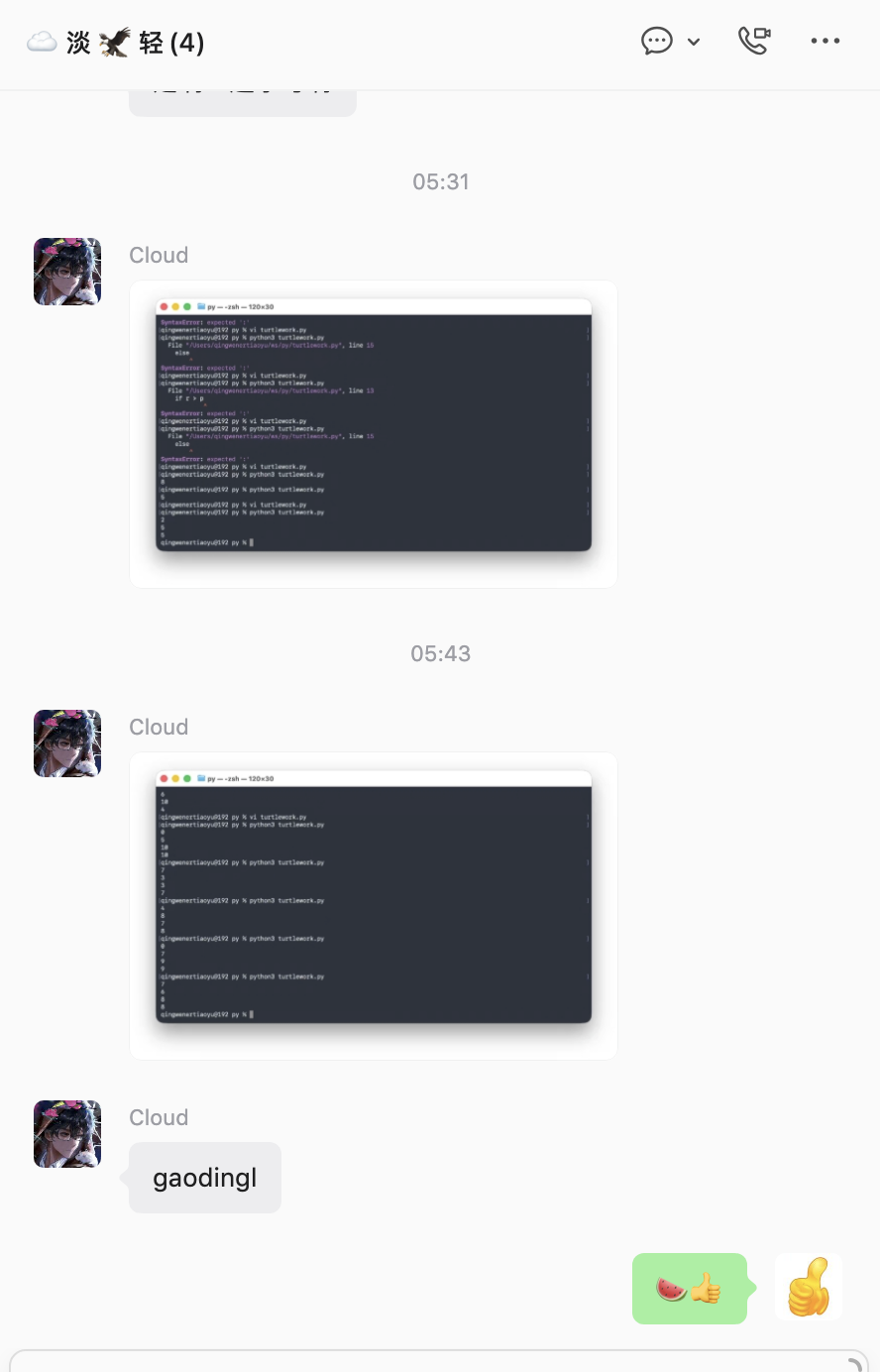
The screenshots arrived with a timestamp:
5:43 p.m.
Only two days earlier, his mother had written:
"有个小帅哥在吃饭路上还惦记着作业还没做完。要早点回家做作业。"
Homework had gone from something finished after 11 p.m. to something completed before dinner.
Along with the screenshots came one excited message:
gaodingl
A tiny typo.
A huge smile.
Discovery
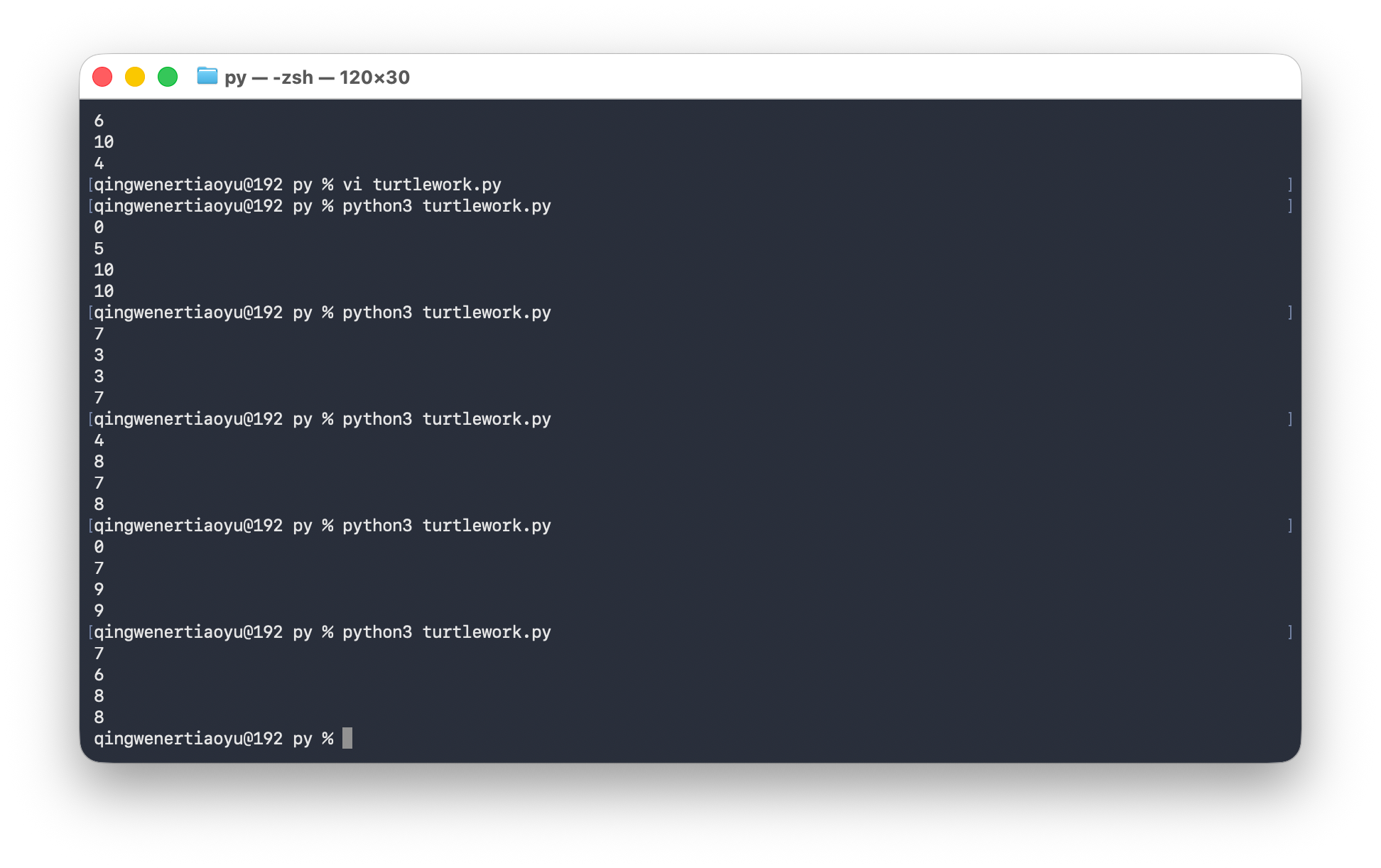
Cloud didn't stop after one successful run.
He included at least five different test cases.
No one had taught software testing.
No one had asked him to prove his program worked.
He simply wanted to know whether it really worked.
That is how programmers begin to think.
Two weeks earlier, Cloud had never programmed.
Now he was independently combining simple ideas to solve a problem beyond the classroom demonstration.
Confidence did not appear because someone told him he was smart.
It emerged because he experienced, again and again:
"I can figure this out."
A student with no coding experience can begin solving unfamiliar problems independently within two weeks.
By experimenting, debugging, testing, and gradually trusting one's own reasoning.
The deepest goal of education is not teaching today's lesson. It is helping students believe they can learn tomorrow's lesson by themselves.