
Living Museum of Learning
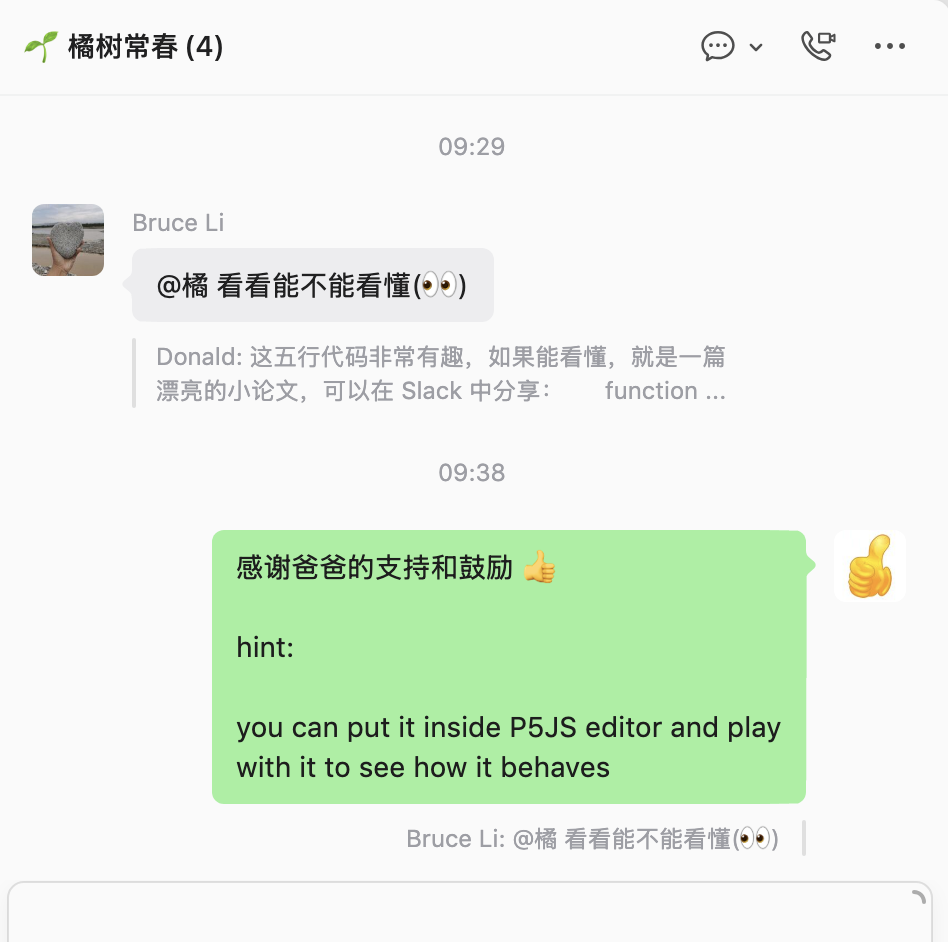
👀 看看能不能看懂
I first met Ivy and her parents in the summer of 2025, shortly after they arrived in Toronto.
Everything in her life had changed at once.
A new country.
A new school.
A new language.
A new culture.
She had to catch up on English while adapting to an entirely different educational system.
Before we even started learning together, I gave her one of my cognitive ability assessments.
She scored 20/20.
In all my years of teaching, I have only met two or three children with that level of reasoning ability.
But what impressed me wasn't only Ivy.
It was her family.
They had heard about me through two completely independent families who happened to know us both. That coincidence eventually brought us together.
I also learned something unusual about Ivy herself.
She didn't simply accept the tutor her parents selected.
She wanted to make her own judgment.
The final decision was hers.
That already told me something about the way this family respected independent thinking.
The day they visited my home for the first time, I was busy talking with Ivy.
Her mother was chatting in another room.
Bruce quietly wandered to my dining table.
There were unfinished 24-point puzzles and several metal disentanglement puzzles lying there.
Without anyone inviting him, he simply picked them up and started solving them.
I remember smiling.
Some people are naturally drawn toward unresolved problems.
Nearly a year later, I shared the same five-line JavaScript function with every family WeChat group and invited the children to study it.
I wrote:
这五行代码非常有趣,如果能看懂,就能写一篇漂亮的小论文,可以在 Slack 中分享。
Most parents simply read the message.
Bruce replied.
He tagged Ivy.
@橘 看看能不能看懂 👀
I answered:
感谢爸爸的支持和鼓励 👍
Hint: you can put it inside the P5JS editor and play with it to see how it behaves.
Nobody explained the algorithm.
Nobody gave away the answer.
The invitation itself became the lesson.
Looking back, Bruce's message didn't surprise me at all.
It was exactly the same instinct I had seen the first day we met.
Whether facing a metal puzzle on a dining table or five lines of elegant JavaScript, his first reaction was identical:
"Let's see if we can figure this out."
Curiosity had remained unchanged.
And this time, it wasn't directed toward himself.
It was passed on to his daughter.
In that tiny WeChat exchange, three roles quietly appeared:
A father who invited.
A teacher who encouraged experimentation instead of explanation.
A child invited to explore.
No one rushed to provide answers.
Everyone protected curiosity.
There is another small artifact from this family that I love even more.
The WeChat group where these conversations happened is named:
🌱 橘树常春
At first glance, it is simply a beautiful Chinese phrase.
But every character carries a story.
橘 is Ivy's own WeChat display name.
橘树 is the little tree growing.
常春 means evergreen—the ability to keep growing through every season.
And Ivy herself has another layer of meaning: her English name connects naturally with the ivy plant, while her dream universities are the Ivy League schools.
A group name that quietly connects a child's identity, a parent's hope, a teacher's journey, and the idea of lifelong growth.
No announcement.
No slogan.
No explanation needed.
Just four characters and a small 🌱.
Perhaps this is the kind of artifact a traditional museum would never collect.
But in the Living Museum of Learning, this is exactly what we want to preserve:
the tiny symbols families create while they are growing together.
Children learn from what adults admire.
When a father chooses to spend his attention on a puzzle instead of his phone...
When he publicly invites his daughter to think instead of asking for the solution...
He teaches something much deeper than mathematics or programming.
He teaches that difficult ideas are worth approaching with curiosity rather than fear.
Years from now, Ivy may not remember this particular JavaScript function.
But she may remember something even more important:
That in her family, thinking was enjoyable.
Curiosity was welcomed.
And difficult problems were invitations, not obstacles.
A family's culture can become one of a child's greatest teachers, long before any curriculum begins.
Curiosity spreads through small moments—an unsolved puzzle on a dining table, a five-line function in a family chat, a simple "👀 看看能不能看懂."
Knowledge can be taught. Curiosity must be caught. When adults model the joy of exploring difficult ideas, children often inherit that joy for life.
Knowledge can be taught. Curiosity must be caught.