Living Museum of Learning
The Cube That Refused to Break
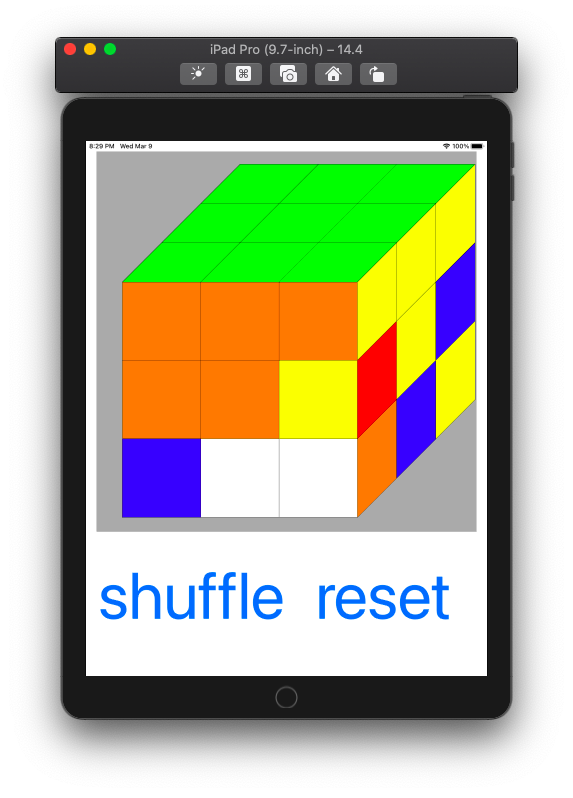
During one-on-one online lessons, Marius wasn't merely learning to solve a Rubik's Cube—he was building its digital twin.
The hardest part was not drawing colorful faces. It was designing the rotation logic: every quarter turn had to move dozens of stickers exactly as the physical cube would, while preserving every hidden relationship inside the puzzle.
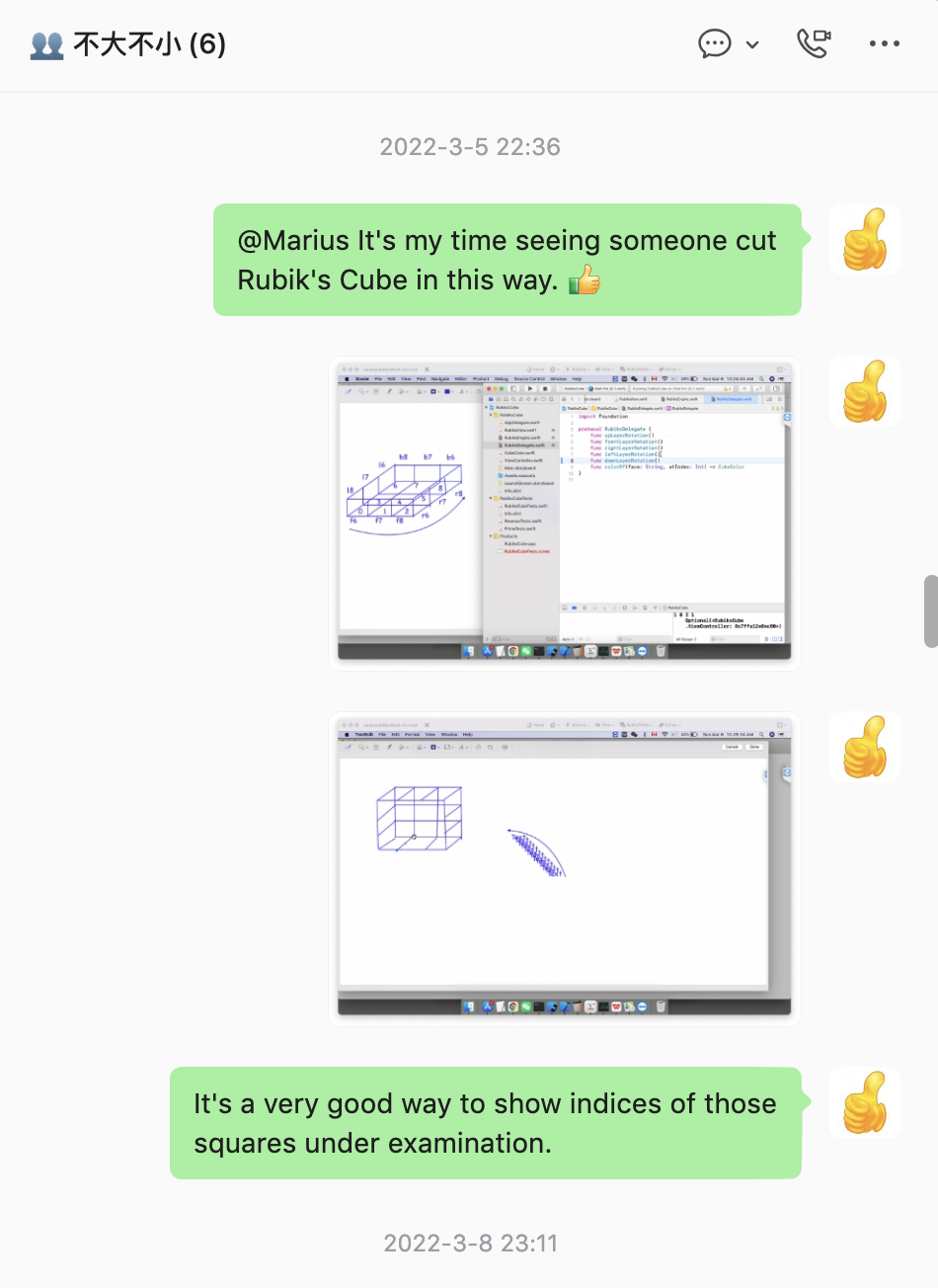
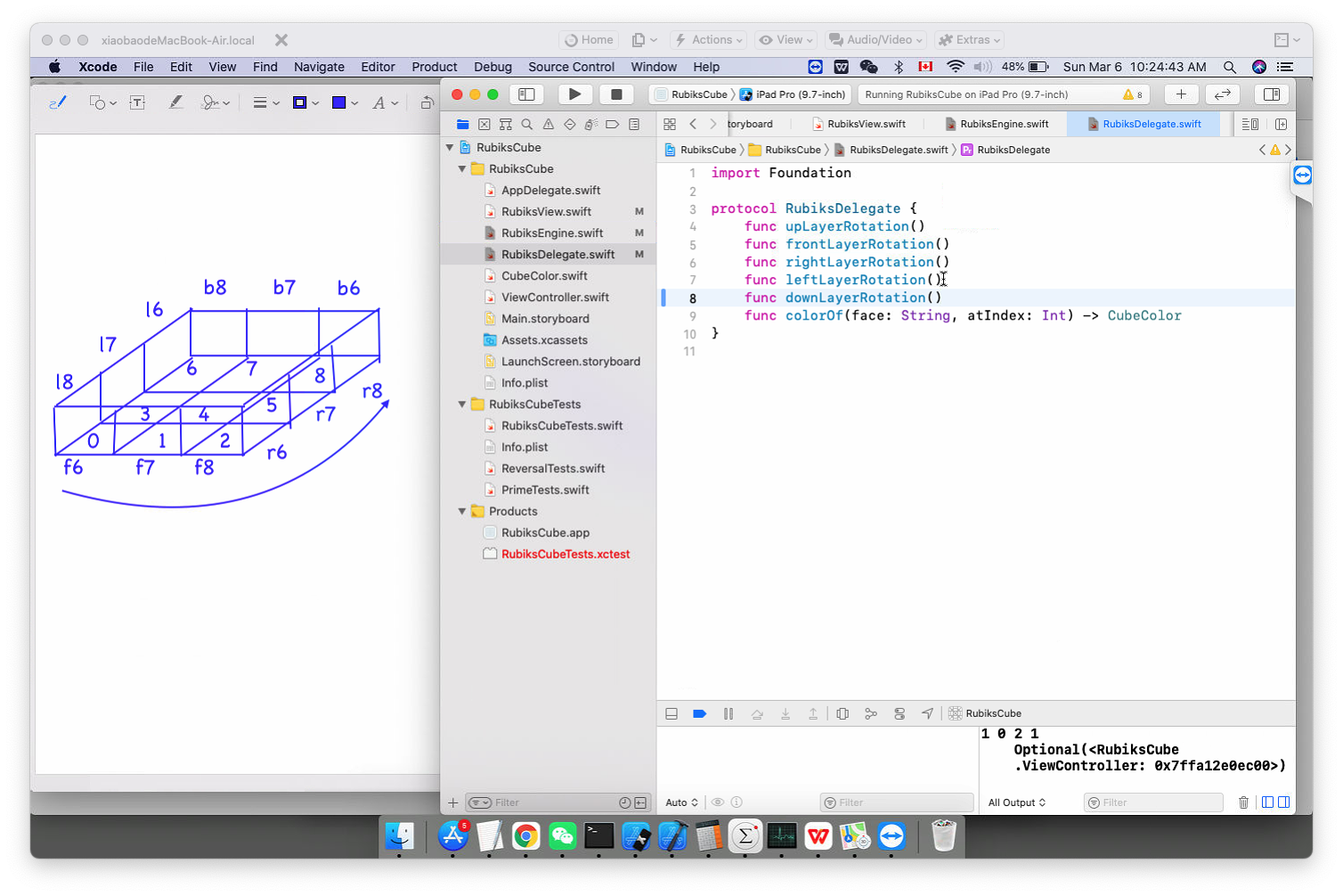
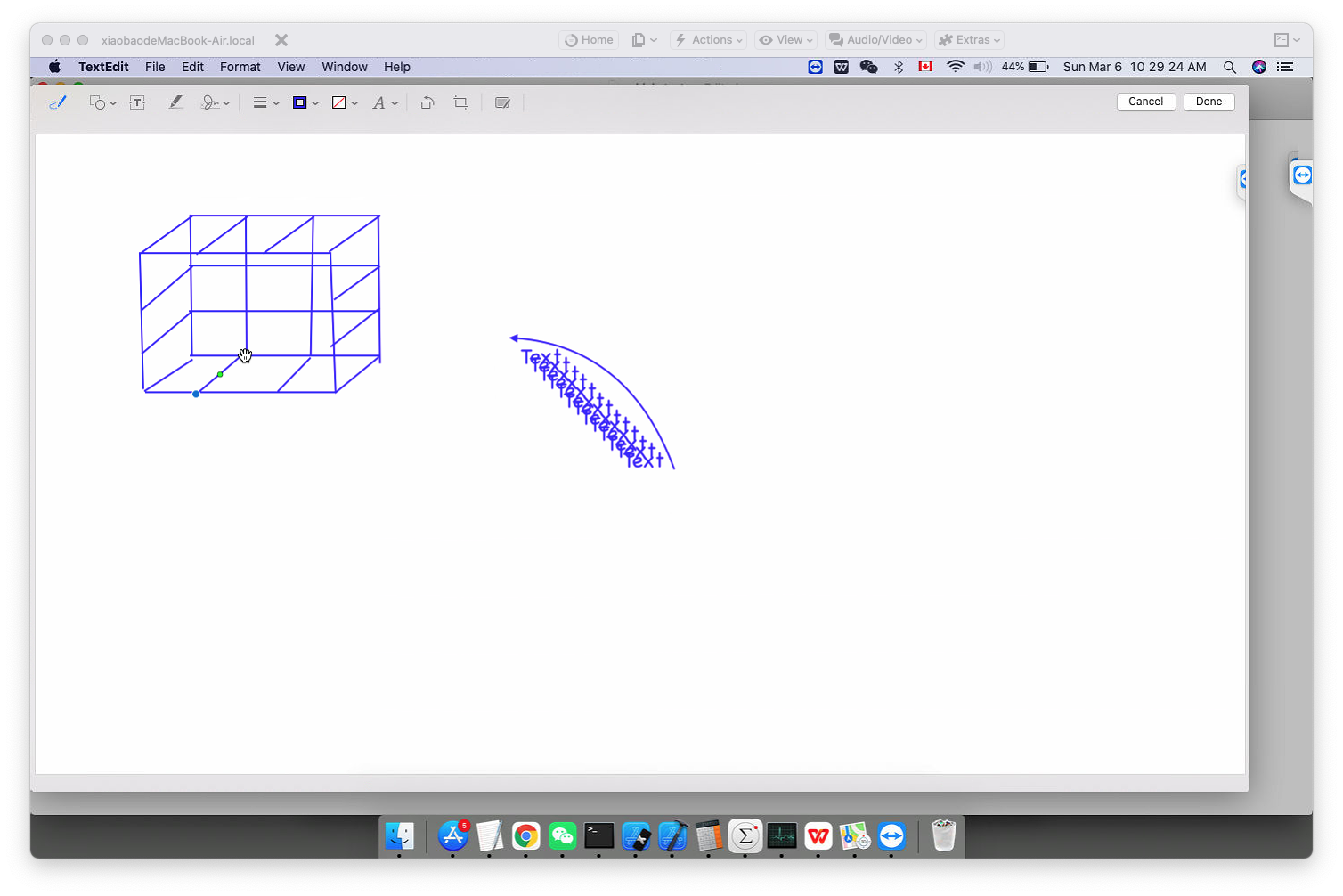
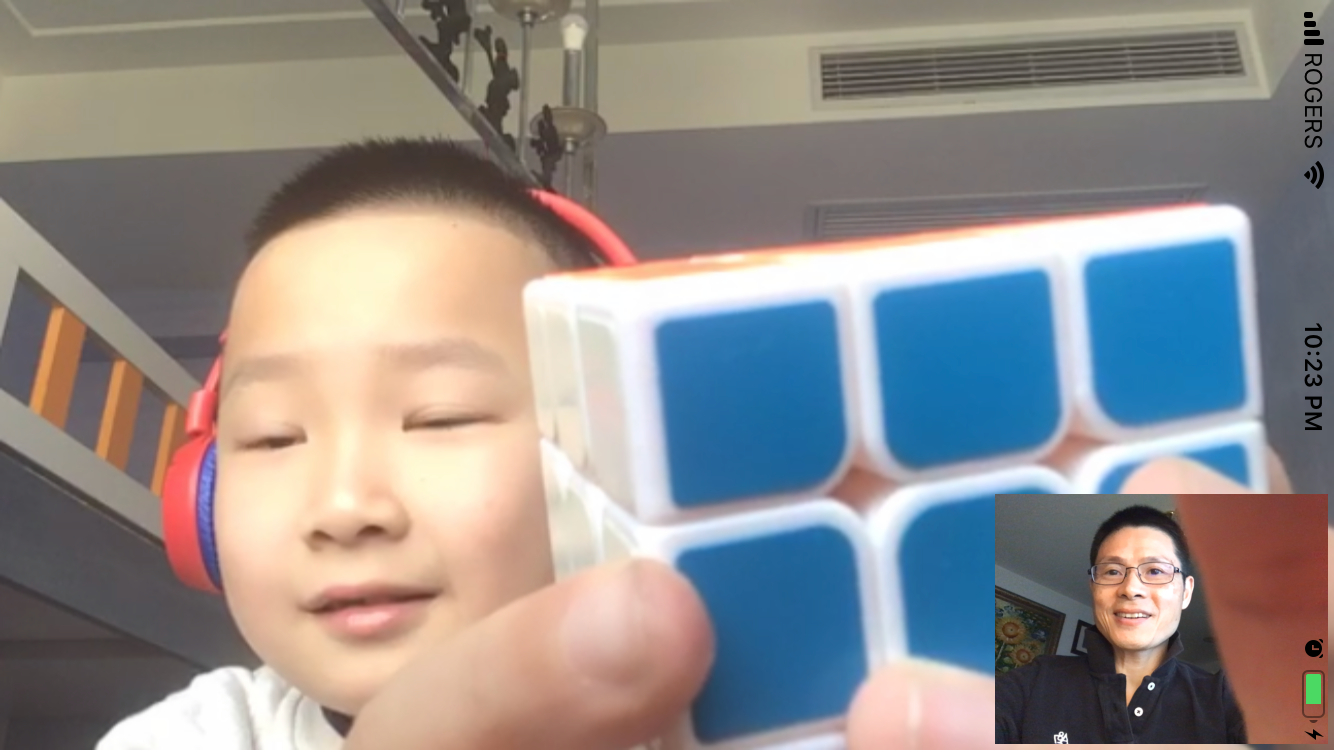
To make the invisible visible, Marius invented an elegant way to study the cube. During a video call, he held the cube close to the camera and sliced it into layers, allowing each group of cubies to be examined separately. Donald had never seen anyone analyze a cube that way before.
The rotation engine was finished.
Then came the moment every programmer knows:
Try to break it.
Move after move.
Face after face.
Sequence after sequence.
Nothing broke.
Not one incorrect permutation.
Not one flipped edge.
Not one twisted corner.
The rotation logic contained zero bugs.
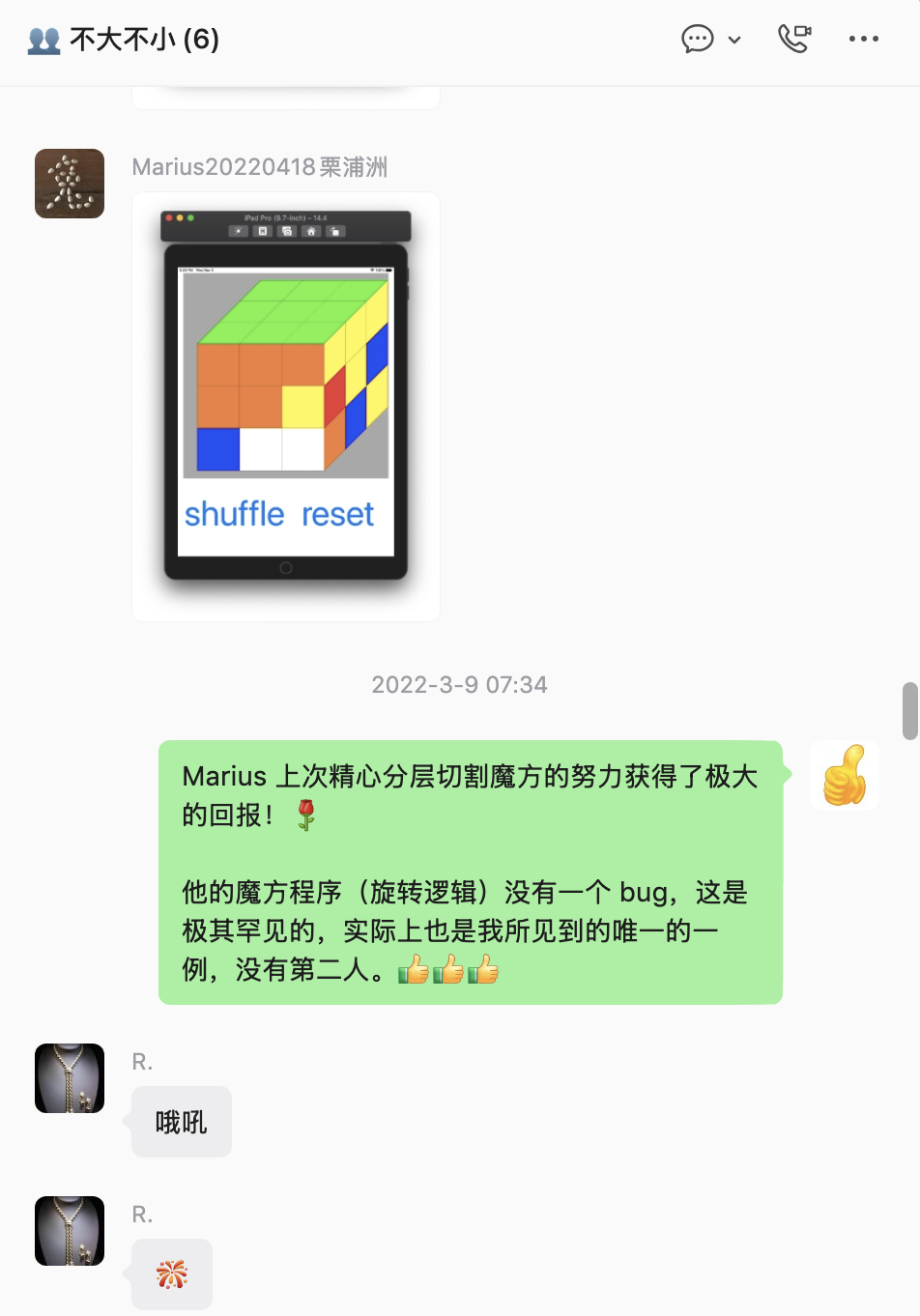
Donald immediately wrote in the family WeChat group:
"他的魔方程序(旋转逻辑)没有一个 bug,这是极其罕见的,实际上也是我所见到的唯一的一例,没有第二人。"
(His Rubik's Cube program—the entire rotation engine—didn't contain a single logic bug.
That is extraordinarily rare. In fact, this is the only case I've ever seen. I've never encountered another one like it. 👍👍👍)
He added that this Grade 5 story would be worth telling in every future interview.
Years later, while browsing the family WeChat history, Donald rediscovered the original messages and screenshots.
There was Marius wearing a headset, holding the cube so close to the camera that one blue face filled the screen.
There was the message praising his unusual layer-by-layer analysis.
There was the timestamp preserving the moment forever.
What had once been an ordinary teaching conversation had quietly become a historical artifact.
The family chat itself had become a small museum.
Programming is often described as writing code.
But great programming begins much earlier.
It begins with constructing an internal model so faithful to reality that the code becomes almost inevitable.
Marius's achievement was not exceptional because he was in Grade 5.
It was exceptional because he understood the cube deeply enough that his implementation matched the mathematics perfectly on the first complete design.
The absence of bugs was not luck.
It was evidence of understanding.
A young learner can build a mathematically correct simulation of one of the world's most famous puzzles.
By observing carefully, inventing better ways to visualize complex structures, and refining a mental model before writing code.
Because the deepest programming skill is not typing faster—it is learning to think so clearly that correctness becomes a natural consequence.