
Living Museum of Learning
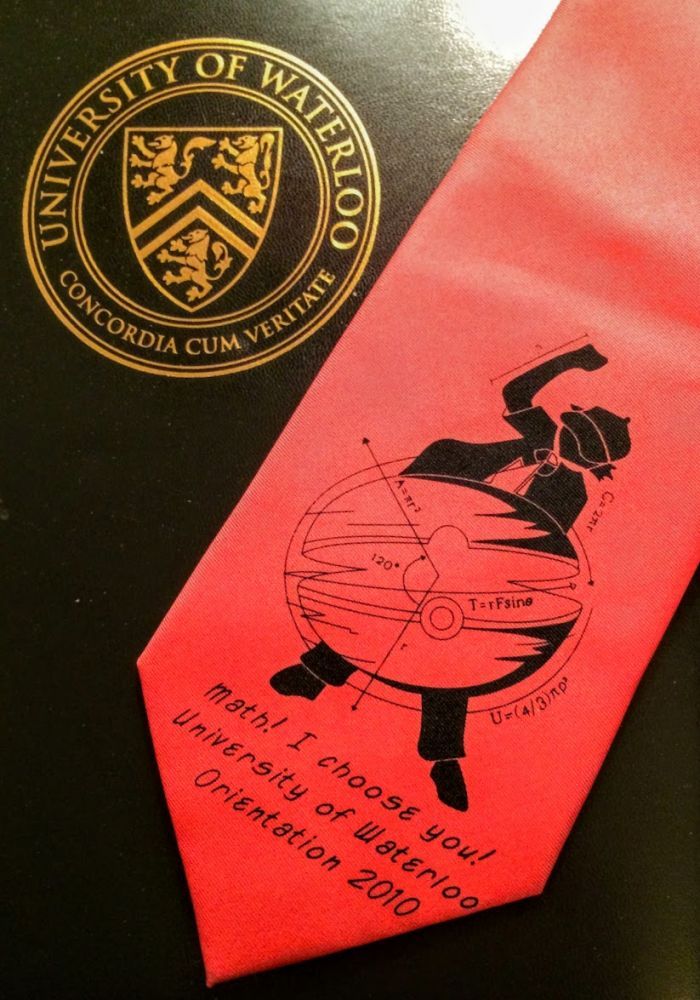
A Tie, Ten Years, and a Road to Waterloo
In 2020, for the first time since our daughter was born, we couldn't see her in person because of the pandemic.
One winter day, my wife was sorting through clothes and casually held up a tie.
"You'll like this one."
I had completely forgotten about it.
The moment I saw it, ten years of memories came rushing back.
During my daughter's years at Waterloo, my wife and I drove between Toronto and Waterloo countless times.
She would always say,
"You don't have to pick me up. Carpooling is easy."
We always gave the same answer.
"We're happy to drive. It's like going for a walk."
One Christmas, after her final exams, the three of us were driving back to Toronto when I was stopped for speeding—the only time in my life.
I thought, "Now I'll have to return to Waterloo for court."
Instead, the officer smiled.
"Slow down."
Then, before we left, he looked toward the passenger seat and said,
"Your daughter is very nice."
He gave me only a warning.
Years later, looking at that forgotten tie, I realized it had silently traveled with us through that entire chapter of our lives.
Memory doesn't always live in photographs.
Sometimes it hides inside an ordinary object that waits quietly in a drawer for years.
A tie.
A ticket.
A receipt.
A key.
When we see it again, the object itself hasn't changed.
We have.
Suddenly, an entire period of life returns—not as isolated events, but as one continuous story.
Objects become meaningful because of the lives that surround them.
The smallest keepsakes often preserve the deepest memories, not because they are valuable, but because they witnessed love repeated over time.