Living Museum of Learning
Lambert and the Spider He Almost Ignored
Whenever Lambert joined a lesson, he was eager to show me something.
A fish.
A frog.
A crab.
Or, most often...
A spider.
He would always say:
"Let me show you something. It'll be quick!"
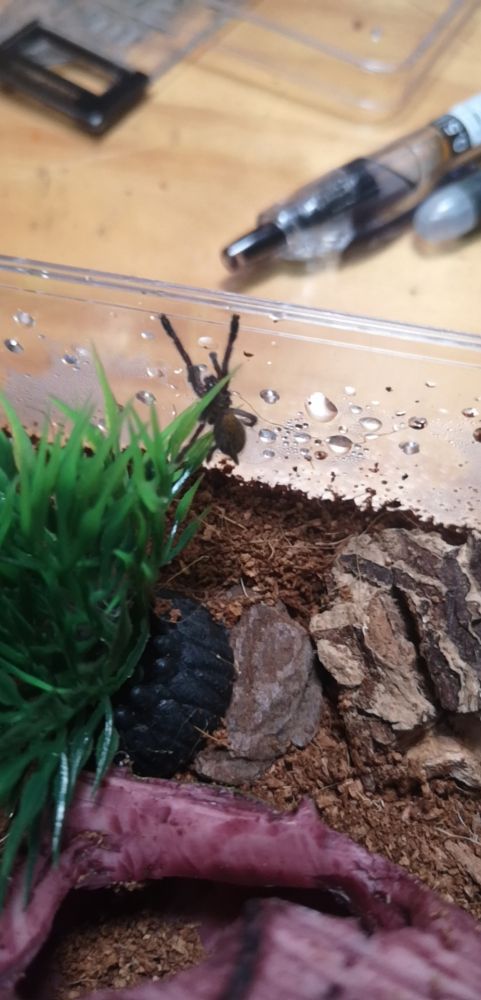
One day he proudly introduced his newest pet, an Orange Baboon Tarantula.
Not long after sending me a photo, he calmly announced:
"My spider escaped. Give me a minute to put him back."
I had no idea how he managed that.
At first, Lambert didn't even like spiders.
They looked dark, hairy, and frightening.
He rarely paid attention to the one his father had bought to encourage him.
Sometimes he forgot to feed it.
Sometimes he almost forgot it existed.
Then one spring day, he lifted the lid.
Everything had changed.
The enclosure was covered with beautiful white silk.
In the center sat the spider, surrounded by its own delicate creation.
What had once seemed ugly had become beautiful.
That discovery changed more than Lambert's opinion of spiders.
It changed the way he looked at living things.
Soon his room became home to fish, frogs, aquatic plants, insects, thermometers, heating pads, and tiny ecosystems he carefully maintained.
His mother once joked that he spent all his time caring for creatures.
Then she added something more thoughtful:
"Maybe I shouldn't be so utilitarian. He enjoys it. He's learning. He's becoming more capable."
That sentence stayed with me.
Curiosity doesn't always begin with mathematics.
Sometimes it begins with a spider.
Or a fish.
Or a handful of pond plants collected after school.
Children rarely separate science from wonder.
They simply care.
And once they care, they begin observing.
Then asking questions.
Then learning.
Education doesn't always start with a textbook.
Sometimes it starts with opening the lid of a spider enclosure and seeing the world differently.
A child's fascination with living creatures can grow into careful observation and scientific thinking.
Wonder deepens when curiosity is paired with responsibility and care.
Some of the most meaningful learning begins not in a classroom, but through everyday encounters with the natural world.
"Maybe I shouldn't be so utilitarian."
That feels universal. Many parents worry that a child's passions are distractions. Sometimes they're the beginning of a lifelong way of seeing the world.