
Living Museum of Learning
Lucas Discovers a Different Kind of Addition
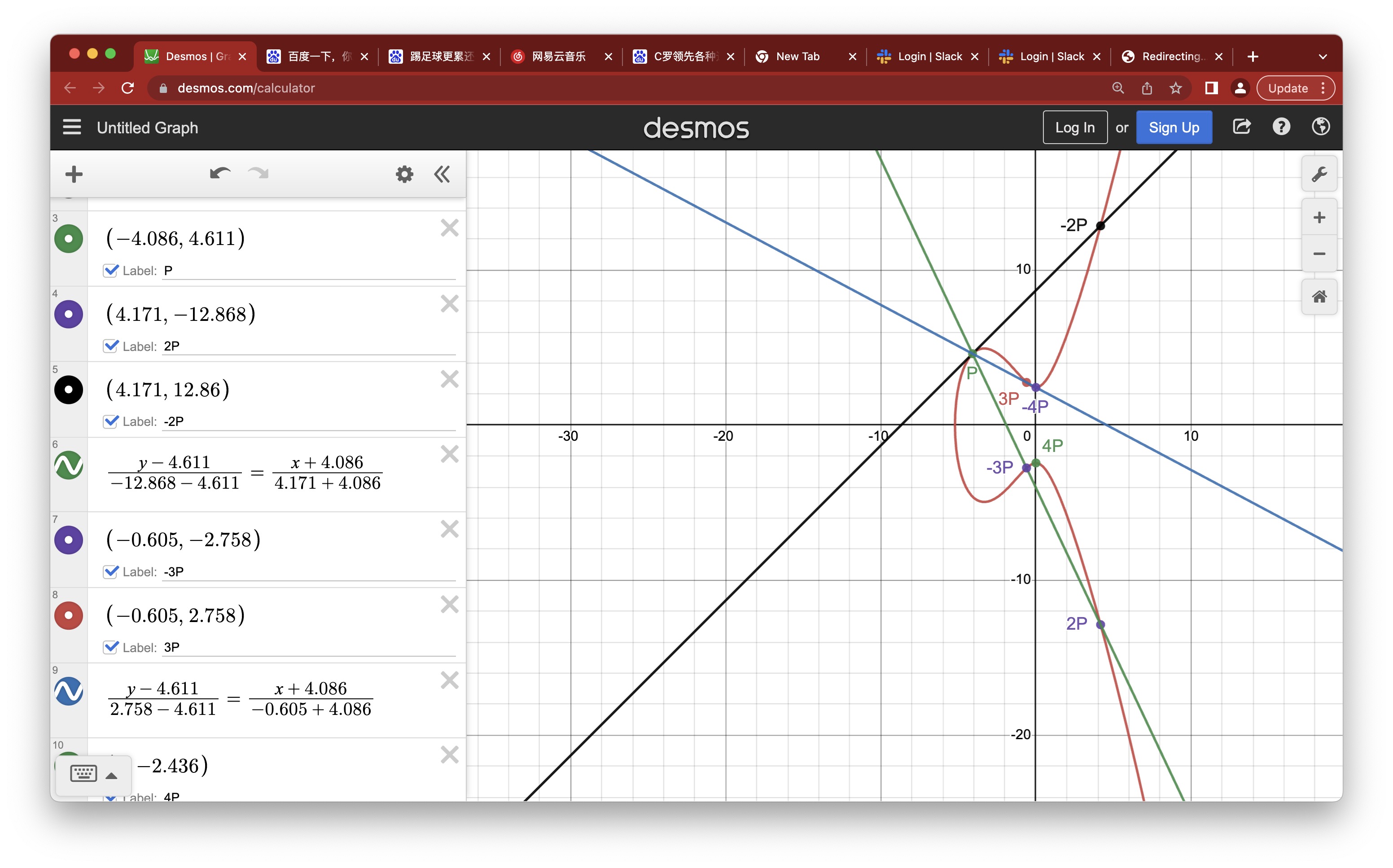
Lucas was in Grade 7 when he began exploring elliptic curves using Desmos.
No programming.
No specialized mathematics software.
Just a coordinate plane, straight lines, and curiosity.
On the screen, he started with a point P and gradually constructed:
2P
−2P
3P
−3P
4P
−4P
Each new point emerged from the same geometric process: draw a line, find the intersection, reflect across the x-axis, and repeat.
At first, the word addition sounded familiar.
But this was not the addition Lucas already knew.
There were no numbers to add.
Instead, points on the curve combined to produce entirely new points.
A straight line became an operator.
Reflection completed the construction.
The geometry itself defined the algebra.
For a Grade 7 student, this was a remarkable realization:
The meaning of an operation can change.
What impressed me most was how naturally Lucas explored.
I had only mentioned in passing that:
"Elliptic curves have a beautiful notion of addition."
That was enough.
He opened Desmos and began experimenting on his own.
Point after point appeared.
Coordinates were recorded.
Construction lines filled the screen.
Nothing about this investigation was part of an exam syllabus.
He explored simply because the mathematics itself was fascinating.
Elliptic curves sit at the crossroads of geometry, algebra, number theory, and modern cryptography.
Lucas did not need to understand all of that.
He only needed one invitation:
"There is a different kind of addition."
Sometimes a single beautiful idea is enough to open an entirely new landscape.
The software mattered very little.
The curiosity mattered everything.
Middle school students can meaningfully explore ideas usually associated with advanced mathematics.
Simple visual tools and curiosity allow abstract concepts to become tangible.
When students discover mathematics through exploration rather than obligation, advanced ideas become invitations instead of barriers.
Lucas wasn't learning elliptic curves because they would appear on an exam.
He explored them because they were beautiful.