The First Encounter with a “World-sized Object”
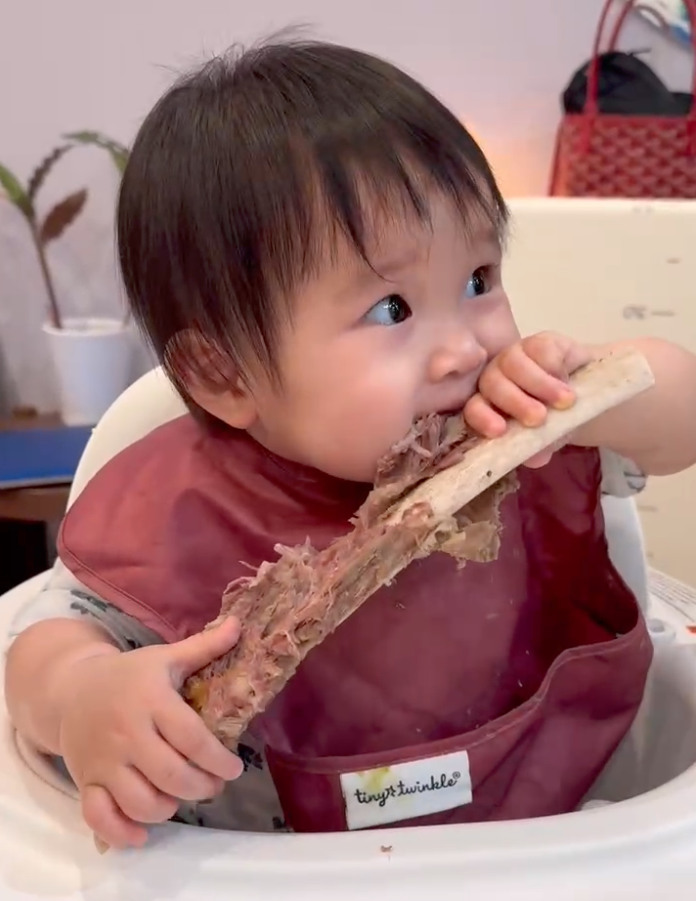
Rhea, 11 months old, sits in her high chair with a large piece of spare rib placed in front of her.
She wears a purple bib. Her small hands hover in the air as she studies the object carefully.
The environment is calm and familiar—parents nearby, speaking softly, smiling, observing.
This is not a structured “teaching moment.” It is a normal family meal.
She is gently encouraged: “Go ahead.”
But instead of focusing only on eating, Rhea shifts into exploration mode.
She notices everything at once:
the size and texture of the rib
her parents’ reactions
the taste and smell
her own hand movements
She reaches forward and makes contact.
Her behavior becomes exploratory rather than purely functional.
She touches the rib, pauses, tastes it lightly, then reacts with a soft “hee-hee” sound.
At one moment, she reacts to the flavor with a small “tsk,” not as rejection, but as sensory feedback.
The experience becomes multi-dimensional:
taste
touch
sound
social response
The object is no longer just food.
It becomes an interactive experience.
Early learning is not organized or verbal.
It is built through:
sensory exploration
emotional feedback loops
social reinforcement
repeated micro-interactions with the environment
In this moment, the child is not being “taught” how to eat ribs.
She is learning that the world is something she can actively engage with.
A very young child can treat everyday objects as rich, multi-sensory experiences, engaging curiosity before language or instruction.
Through safe, open-ended exposure where the child is allowed to touch, try, react, and observe without rigid expectations.
Early experiences of “the world is explorable” shape long-term learning attitudes, curiosity, and confidence in unfamiliar situations.